
You buy a cardigan because it looks soft, warm, and easy to wear. Then the problems begin much sooner than expected. The sleeves start pilling after one afternoon. A seam opens after a few wears. Buttons fall off, one color fits differently from another, or careful washing leaves the cardigan much smaller than before. Some arrive with deep packaging creases, strong odors, or signs that they may have been handled before.
These problems are frustrating because a cardigan can look perfectly fine when you first take it out of the package. The real test often comes after wearing, washing, moving, and checking the small details. Based on the problems documented in this article, a careful buyer should look beyond softness and thickness and pay closer attention to fabric, seams, buttons, fit, care needs, packaging, and overall comfort.
DEFECT AUDIT OVERVIEW
| Product Area | Common Problems | Why It Matters |
|---|---|---|
| Knit fabric | Pilling and tearing after minimal wear | A cardigan can start looking worn out before the season is over |
| Seams and closures | Open seams and buttons that detach | Everyday movement can quickly expose weak construction |
| Care and fit | Shrinkage and major size differences between colors | Washing or reordering another color can produce an unexpected result |
Why Inexpensive Acrylic Cardigans Start Pilling and Tearing After Only One or Two Wears
You buy an inexpensive acrylic cardigan because it looks thick, soft, and easy to wear. Then, after one afternoon, the sleeves start looking fuzzy. After a couple of wears, the surface pills, a pocket begins tearing, or the knit simply starts coming apart. Cheap does not feel like a bargain when the cardigan ages before the season even starts.
One documented case, OFH-AUDIT-KKRX, involved a cardigan reported to pill and tear after the first wear, with the fabric breaking down after only two wears. Another, OFH-AUDIT-FL4Z, was reported to develop severe pilling after washing, making a relatively new cardigan look worn out and neglected.
The common problem often traces back to short, inexpensive fibers. Under daily rubbing from seat belts, bags, desks, or simply moving your arms, those shorter fibers can work loose and break. Once enough of them reach the surface, they form pills; when the knit is weak enough, holes and tears can follow.
🔍 Rub the Sleeve Before You Buy
Run your fingers firmly over the elbow and underarm areas, then lightly tug the knit in opposite directions. If the surface already feels loose, fuzzy, or easily disturbed, do not expect daily friction to make it look better. Also check the pocket corners and seams, where a weak cardigan may show trouble first.
Longer fibers generally give a knit more material to stay connected under everyday wear. The evidence used for this section identifies cashmere fibers over 32 mm and extra-long-staple cotton over 35 mm as examples of longer fibers used for better durability. That does not mean every cardigan made with those fibers will never pill, but fiber length is a far more useful clue than a thick-looking knit or a bargain price tag.
Acrylic can still be perfectly wearable, but the cases above show why shoppers should not treat "thick" as proof of quality. When the surface starts fuzzing after minimal use, or the knit separates under a gentle pull, this particular product may not be built for the daily wear its appearance promises.
How Warm Water and Dryer Heat Cause a Cardigan to Shrink a Full Size
The frustrating part about shrinkage is that you often do not get a second chance. A cardigan can look fine going into the wash and come out shorter, tighter, or suddenly too small to button.
One documented case, OFH-AUDIT-KN95, reported severe shrinkage of roughly a full size even after the garment was hand-washed and laid flat to dry. The same product was also reported to lose color in spots. That is exactly why a cardigan labeled as easy to care for deserves a closer look before the return window closes.
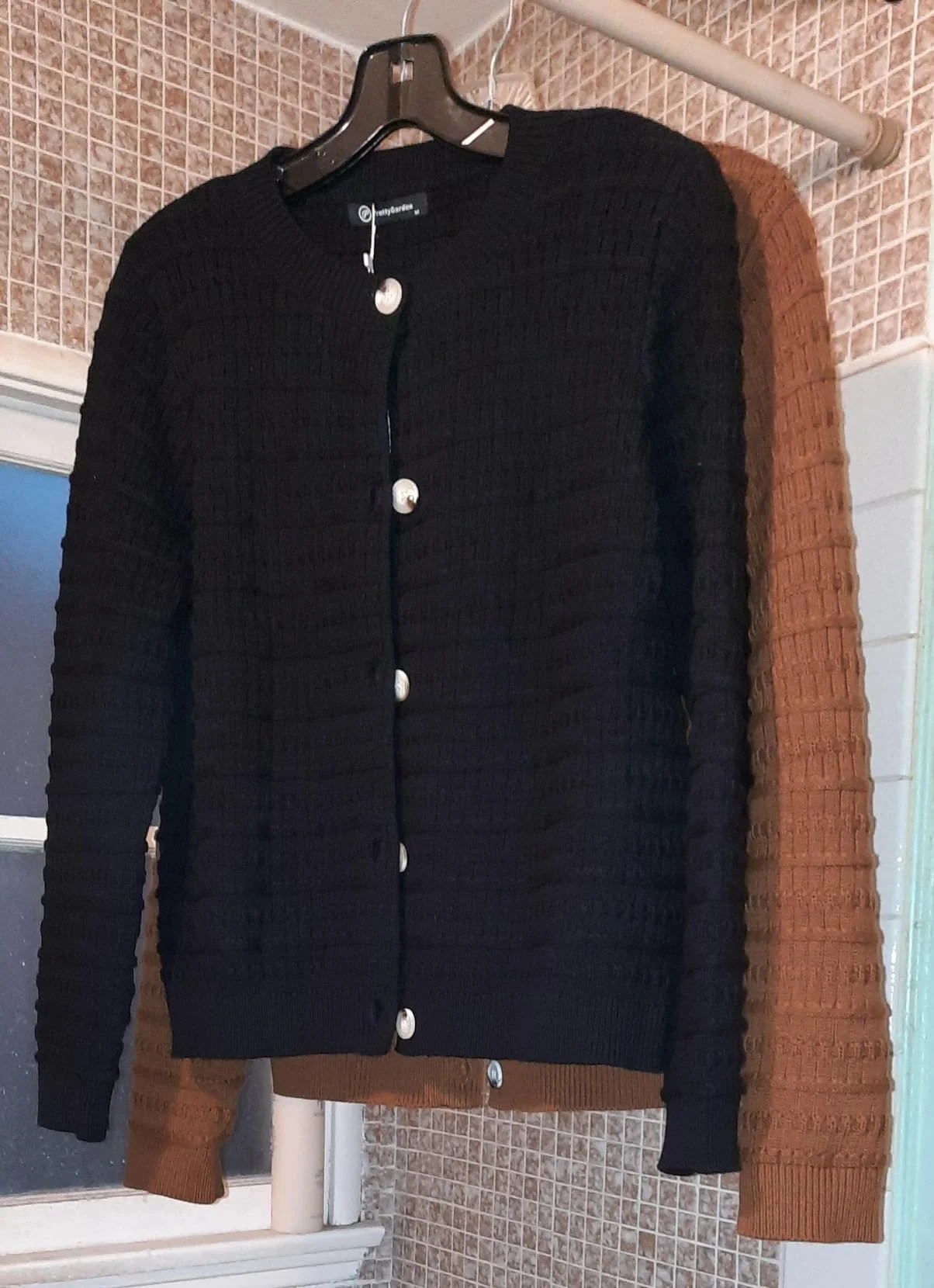
Heat is especially unforgiving to animal-based knits such as cashmere and wool. Once the fibers are exposed to too much warmth and agitation, the garment can tighten up and stay that way. A dryer can make the damage worse, with shrinkage reaching 10% to 15% in some cases.
🧺 Check the Care Label Before the First Wash
Before washing, look for vague instructions that promise easy care while giving little guidance about water temperature or drying. Then check whether the cardigan still feels unusually delicate for something supposedly built for regular washing. If a knit needs careful treatment but the marketing sells it as effortless, your laundry routine may be carrying more risk than the product page suggests.
Color loss is another warning sign. In the OFH-AUDIT-KN95 case, shrinkage was accompanied by localized fading, so the problem was not simply that the cardigan became smaller—it also stopped looking like the garment the buyer originally received.
A reliable care label should make temperature limits clear, especially for wool and cashmere. Certifications such as OEKO-TEX can also offer an additional signal around dye and chemical standards, but they do not guarantee that every cardigan will resist shrinkage or fading.
The practical takeaway is simple: hand-washing alone is not always enough to protect a poorly made knit. When a cardigan loses an entire size despite careful washing and flat drying, the problem may lie with how that particular garment was prepared before sale. For shoppers who want predictable everyday wear, that kind of feedback is a reason to be cautious with the consumer evidence case in question.
What Causes Side Seams and Armholes on Knit Sweaters to Pull Apart and Tear
A cardigan does not need a dramatic accident to split at the seams. Ordinary arm movement, reaching for a bag, or a few wash cycles can be enough to expose weak stitching. The trouble usually starts where the knit is already being pulled: under the arms, along the side seams, around the neckline, and at pocket corners.
One documented case, OFH-AUDIT-FL4Z, developed a side-seam opening measuring about 12 inches after only six light wears. The same garment was reported to develop a hole near the neck after just two wears. Another case, OFH-AUDIT-8B78, included reports of pockets falling apart within three weeks and three holes already present in the back of the sweater.
🧵 Pull Along the Armhole Seam
Before removing the tags, hold the cardigan near an underarm seam and gently stretch the fabric on both sides. Look for stitches separating, loose ends, or visible gaps between the two panels. Then turn the garment inside out and check whether the thread is securely finished rather than simply disappearing into the seam.
Knitwear moves with the body, so the seams need enough flexibility and reinforcement to move with the garment instead of fighting against it. A weak straight seam can become the point where the cardigan gives up first. Once one section starts pulling open, the damage can spread quickly because every movement keeps stressing the same line.
Pocket corners deserve the same attention. A pocket may look decorative and sturdy on a product page, but if its attachment is weak, everyday use can turn that detail into the first hole on the cardigan.
The cases above do not prove that every unit will fail the same way, but they show why visible seam reinforcement matters. A cardigan should not need six wears to reveal a foot-long opening, and a neck area should not tear after being worn twice. For the consumer evidence cases represented by OFH-AUDIT-FL4Z and OFH-AUDIT-8B78, the reported failures suggest that shoppers should inspect seams carefully before relying on the garment for regular wear.
Cardigan Buttons Popping Off and Placket Gapping: How Weak Stitching Causes Detachment
A button coming off after a long day is annoying. A button popping off after two hours is a quality problem. On a cardigan, the front closure is pulled every time you sit, reach, breathe, or move your arms, so weak stitching usually gets exposed quickly.
One documented case, OFH-AUDIT-L4GS, reported buttons coming off during the first wash, while other feedback described buttons popping off within two hours of wear. Another case, OFH-AUDIT-KKRX, reported abnormal button placement that caused the front to gap open awkwardly across the chest.
🧷 Tug the Button Before You Wear It
Hold the fabric around each button and pull gently. Then fasten the cardigan and look straight at the placket. If the button already feels loose, the fabric puckers around the stitches, or the buttonholes pull out of line, do not assume normal wear will somehow fix it.
A well-secured button needs more than a couple of loose loops holding it in place. Reinforced stitching helps the thread stay put when the front of the cardigan is repeatedly opened, closed, and pulled across the body. Without that extra security, the button becomes the first piece to escape the garment.
The placement matters too. Even firmly attached buttons cannot compensate for a poorly aligned placket. When the spacing is wrong, the front can gap, twist, or pull open in the areas where you most want the cardigan to sit flat.
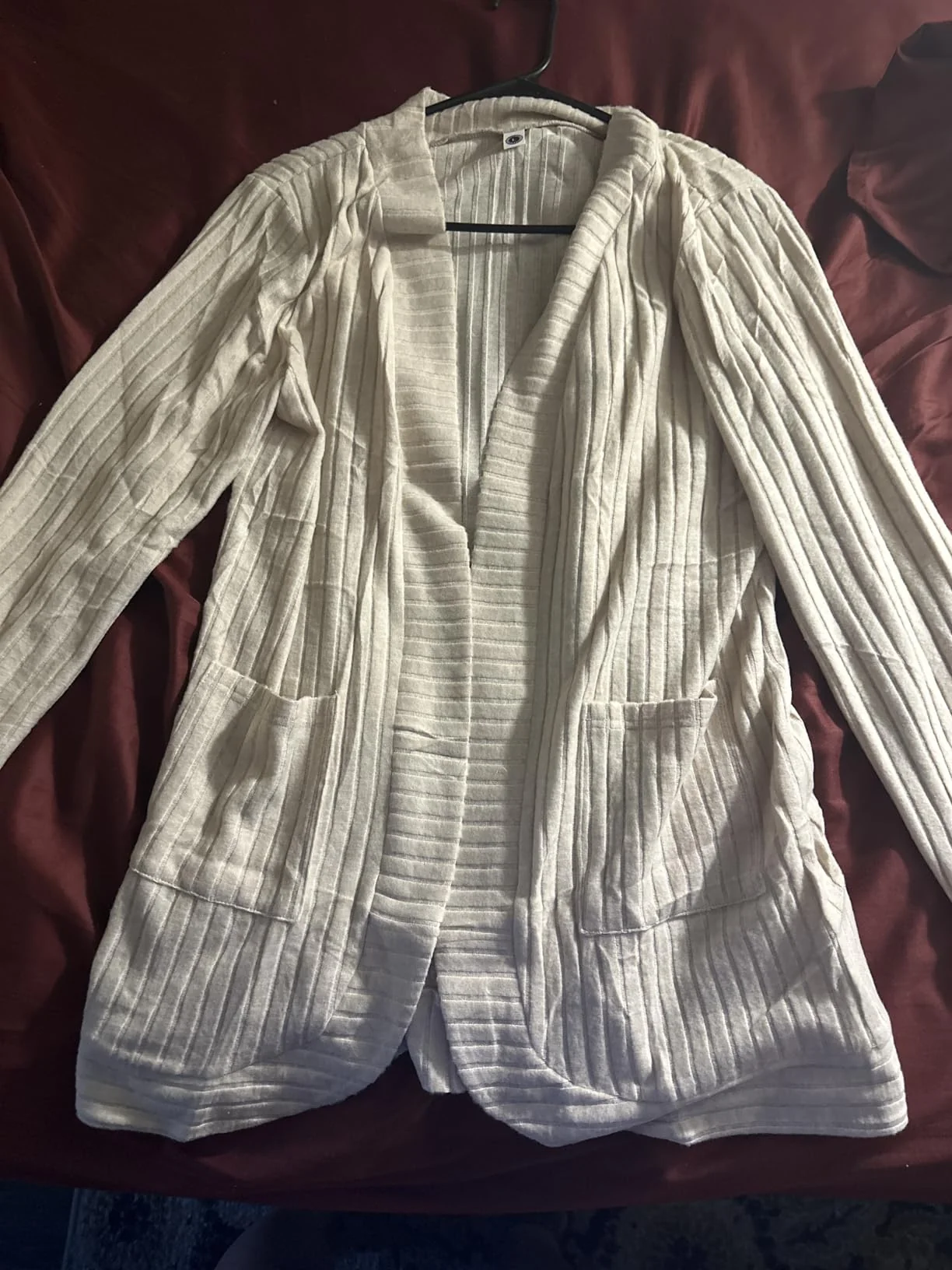
That creates a particularly frustrating kind of failure: the cardigan may technically still have all its buttons, yet still look badly fitted once you fasten it. A closure should hold the front together without making the fabric buckle or exposing an awkward gap.
The reported failures in OFH-AUDIT-L4GS and OFH-AUDIT-KKRX do not mean every cardigan with buttons will have the same problem. But when buttons detach almost immediately or the placket gaps because of poor placement, those particular consumer evidence cases deserve closer scrutiny before you rely on them for regular wear or an important occasion.
When the Same Cardigan Fits Differently Across Colors: Sizing Discrepancies Explained
The label says Large. You order another color in Large. Suddenly, it fits like an entirely different size. For shoppers looking for a plus size cardigan or an oversized cardigan sweater, that kind of inconsistency can turn a simple color choice into a sizing gamble.
One reported example, OFH-AUDIT-L4GS, involved a Royal Blue Large that fit dramatically smaller than the same size in other colors. Another case, OFH-AUDIT-BMWF, described an XXL as unexpectedly small, while the garment itself was also reported to feel thin for a cardigan. OFH-AUDIT-KKRX raised the opposite problem: a boxy cut that added bulk without looking intentionally oversized.
The issue is not simply whether a cardigan runs small or large. A true oversized cardigan should look deliberately roomy. A boxy cardigan that swallows the body is a sizing problem wearing an oversized label as camouflage.
Different colors can behave differently during production, so a reliable manufacturer needs to account for those differences instead of assuming every fabric batch will finish at exactly the same measurements. When that control is missing, the same pattern and size label can produce noticeably different results across colors.
That matters even more when shopping online. A shopper may finally find a Large that fits, reorder the same cardigan in another shade, and receive a version that is much tighter or much looser without changing anything except the color selection.
The product code OFH-AUDIT-L4GS is a particularly clear warning: changing colors should not make a standard adult Large suddenly fit like a much smaller garment. For oversized and plus-size shoppers, compare the size chart for each color when separate measurements are available, and be cautious when reviews repeatedly report major differences between shades.
A size label should describe a reasonably consistent garment. When one color fits normally and another changes the entire silhouette, the problem is not your body—it is the lack of reliable size control.
Can Steaming and Washing Remove Deep Creases Caused by Vacuum-Sealed Packaging?
A vacuum-sealed cardigan can arrive looking like it spent the trip folded under a stack of bricks. The good news is that many ordinary wrinkles relax after steaming. The bad news is that some deep packaging creases do not.
In one reported case, OFH-AUDIT-KKRX, deep folds remained after washing, steaming, and ironing. Some crease lines also appeared visibly different in color from the surrounding fabric. Another reported product, OFH-AUDIT-BMWF, arrived with severe wrinkling linked to vacuum packaging that did not readily recover.
This is where shoppers can waste time trying one rescue method after another. A light shipping wrinkle is one thing; a sharp crease that stays after washing and steaming is another. When synthetic fibers have been held under heavy compression for a long period, the fabric can keep that flattened shape instead of springing back.
🧺 Unfold the Cardigan Before You Wash It
Open the cardigan flat and look closely at the deepest fold lines. Then gently bend the fabric along those marks. If the crease feels unusually hard or remains sharply visible after the garment has rested, steaming may not completely erase it.
Pay attention to color changes too. A crease that looks darker, lighter, or shinier than the rest of the cardigan is more than an ordinary surface wrinkle from being folded in a shipping box. That can leave the garment looking permanently damaged even when the fabric itself has not torn.
This matters because a buyer may spend the first few days washing, steaming, and ironing instead of deciding whether the cardigan is acceptable. By the time the damage appears permanent, the return window may be much closer.
The reports involving OFH-AUDIT-KKRX and OFH-AUDIT-BMWF suggest that deep vacuum-packaging creases are not always removable with normal home care. For those particular consumer evidence cases, persistent folds and discoloration are reasonable reasons to inspect the garment carefully as soon as it arrives.
Unpleasant Chemical Odors and Unwashed Returns: What to Check When Unboxing a Cardigan
The first problem with some cardigans appears before you even try them on. You open the package and get hit with a sharp chemical smell, a bleach-like odor, or something worse that makes you immediately wonder whether the item is actually new.
One documented case, OFH-AUDIT-L4HF, included reports of a strong foul odor, along with hair, body odor, and a used tissue found in the garment. The tags were reportedly removed and loose inside the package. OFH-AUDIT-KN95 was associated with a strong chlorine or bleach-like smell that buyers struggled to remove, while OFH-AUDIT-5TX drew complaints about an unusual chemical odor.
👃 Smell the Cardigan Before Removing the Tags
Open the package in a ventilated area and smell the fabric directly, especially the underarms, neckline, pockets, and folded sections. Then check inside the pockets for hair, debris, stains, or anything that clearly should not be there. If the cardigan smells strongly worn, chemically treated, or visibly used, do not wash away the evidence before documenting the condition.
A new garment may have a temporary manufacturing or packaging smell, but a strong odor that remains after airing out is a different concern. Likewise, loose tags, body hair, stains, or used items inside a pocket can raise questions about whether a returned garment was properly checked before being sent back out.
This is also why textile safety standards such as OEKO-TEX matter to shoppers who want more transparency around restricted substances and chemical residues. Certification is not a substitute for opening the package and checking the actual garment, but it can provide an additional signal when comparing products.
The reports connected to OFH-AUDIT-L4HF are especially hard to ignore because the complaint was not limited to a strange smell. Hair, body odor, and a used tissue turn a disappointing unboxing experience into a basic hygiene concern.
The cases described here do not establish that every unit from these products will arrive in the same condition. Still, a strong chemical or bleach-like odor, persistent foul smells, or signs of previous wear are reasonable grounds to inspect the garment closely and keep the original packaging until you are satisfied with what arrived.
Cashmere vs Synthetic Blends: How Fiber Breathability Affects Temperature Regulation
A cardigan can fail at temperature control in two opposite ways: too thin to keep you warm, or too synthetic and stuffy to stay comfortable once you start moving. That is why the fiber label matters more than a thick-looking knit.
One reported case, OFH-AUDIT-FL4Z, described a cardigan as too thin for cool fall or winter weather and itchy against the skin. OFH-AUDIT-KKRX received complaints that its acrylic fabric felt rough to the touch. Neither problem is solved simply by adding more bulk.
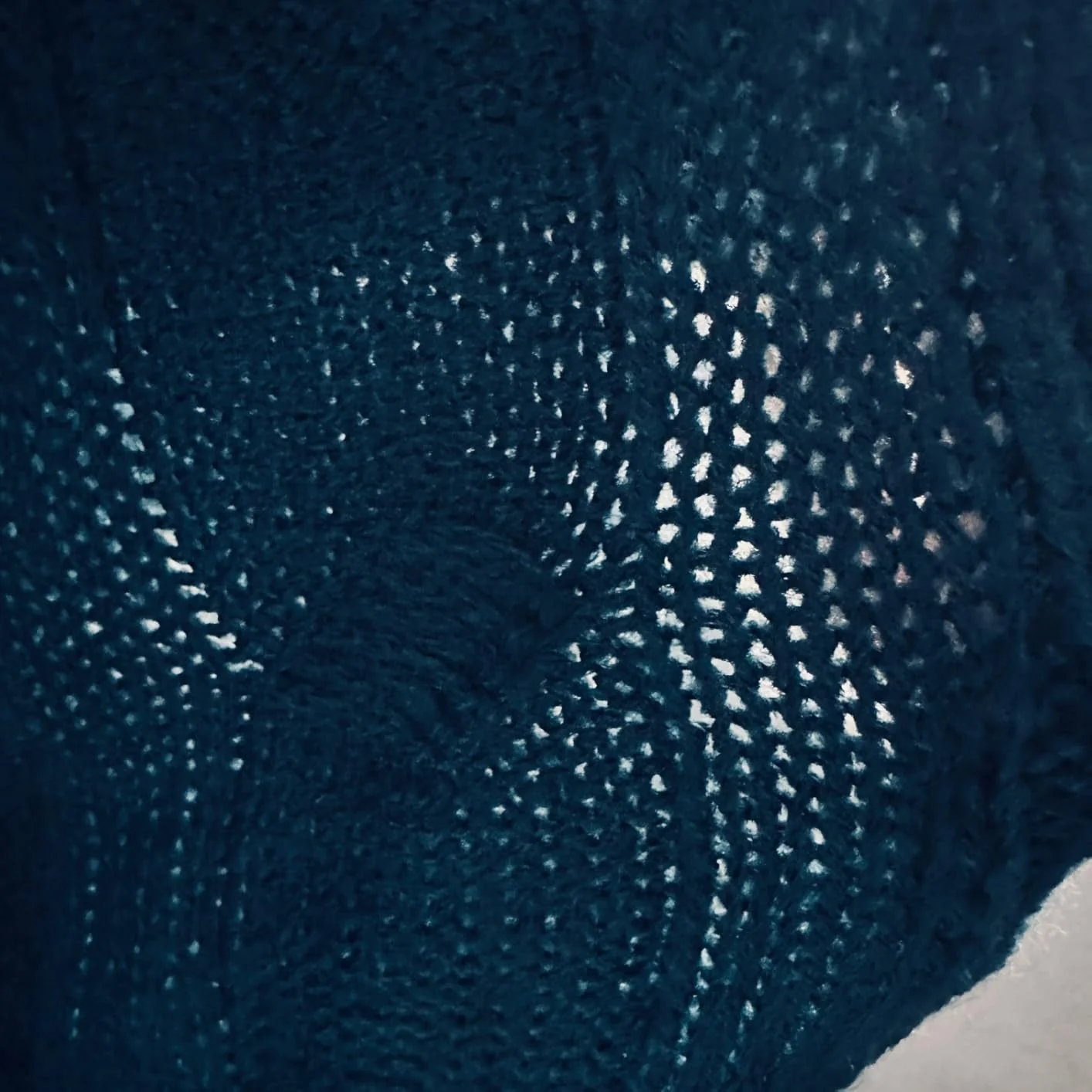
Cashmere and fine merino wool manage warmth differently from many inexpensive synthetic blends. Their fibers can hold small pockets of air close to the body while allowing moisture and excess heat to move away. That gives the cardigan a better chance of feeling warm when you are cold without turning into a sweaty layer once you move indoors.
Fine merino wool is identified here as measuring under 18.5 microns, while cashmere fibers are described as hollow. These natural features help explain why a lighter wool cardigan can sometimes feel more comfortable across changing temperatures than a heavier synthetic knit.
This does not mean every cashmere or merino cardigan will automatically feel perfect. Fiber quality, knit density, and the final fabric all influence the result. But a cardigan marketed as warm should not rely on a rough, bulky surface while leaving the wearer itchy or overheating.
For shoppers searching for a cashmere cardigan for women or a merino wool cardigan, the practical question is not simply, "How thick is it?" Ask instead whether the fibers are designed to keep warmth close while still letting your body breathe.
OEKO-TEX certification can also be a useful additional signal for shoppers concerned about harmful substances and skin contact, especially when a cardigan is worn directly over bare arms or a thin top.
The complaints tied to OFH-AUDIT-FL4Z and OFH-AUDIT-KKRX show the limits of judging warmth by appearance alone. A cardigan that feels like sandpaper or fails to keep out the cold is not delivering much value just because it looks thick on the hanger.
CONCLUSION
A good cardigan should survive more than a few careful wears. Before buying, look past the product photos and ask practical questions. Does the fabric feel stable when rubbed? Do the seams and pocket corners look secure? Are the buttons firmly attached and the placket sitting flat? If you are buying multiple colors, check whether reviews mention major fit differences.
The care label deserves the same attention. A cardigan that needs careful washing should give clear guidance, especially when it contains wool or cashmere. When it arrives, inspect it before removing the tags. Check for deep creases, unusual odors, loose tags, hair, stains, or other signs that something is wrong.
The safest long-term choice is a cardigan with comfortable fibers, secure construction, reliable sizing, and care requirements that match how you actually plan to wear it.
THE ULTIMATE BUYING VERDICT
| Verdict | Key Consideration | Recommendation |
|---|---|---|
| 🔴 Significant concerns | Rapid pilling, tearing, seam openings, loose buttons, severe shrinkage, major color-to-color size differences, or signs of poor condition on arrival | Avoid relying on these cardigans for regular wear. Inspect them carefully while the return window is still open. |
| 🟡 Acceptable with limitations | Some acrylic or synthetic cardigans may be wearable but can feel rough, thin, less comfortable, or more likely to develop deep packaging creases | Consider them only if the price, intended use, and care needs match your expectations, and check construction before keeping them. |
| 🟢 Meets long-term expectations | Comfortable fibers, reliable warmth, secure seams, reinforced buttons, consistent sizing, and clear care instructions | Look for a cardigan that stays comfortable, holds its shape, and shows solid construction before you commit to repeat wear. |