
A cashmere sweater can feel perfect when you first take it out of the package, then become a problem after only a few wears. It may shrink after washing, turn see-through in daylight, split at the sleeve seam, or become covered in fuzz and pills. Even a sweater that survives regular wear can come out of storage with stretched shoulders or moth damage.
These problems are not all caused by one bad choice. Some begin with thin fabric or weak seams, while others happen because cashmere is washed, dried, or stored the wrong way. The good news is that many warning signs are visible before you buy, and several forms of damage can be avoided with better care. A careful check of the knit, seams, and surface can help you choose a sweater that stays comfortable and presentable longer.
DEFECT AUDIT OVERVIEW
| Situation | Real-World Impact | Practical Advice |
|---|---|---|
| Washing and drying | Heat, rough handling, and tumble drying can shrink or distort the sweater | Use cold water, mild detergent, gentle washing, and flat drying |
| Thin knit construction | Pale colors may look see-through and provide little warmth | Check the knit under a strong light before buying |
| Weak seams and short fibers | Sleeve seams may split and the surface may pill quickly | Inspect the seams and gently check high-friction areas for loose fuzz |
How to Wash and Flat-Dry a Cashmere Sweater at Home Without Shrinking It
There is no gentle way to put this: the dryer is one of the fastest ways to turn an expensive cashmere sweater into an expensive mistake. Once a favorite sweater comes out noticeably shorter and tighter, there is usually no simple way to stretch it back to its original fit.
That pattern shows up in the reported cases. One buyer associated with OFH-AUDIT-HFD3 reported severe shrinkage after washing, while another case, OFH-AUDIT-4LQJ, described a sweater reduced to a much smaller, almost child-sized fit. A garment that was already short before washing can lose even more usable length after one bad laundry cycle.
Cashmere needs a slower approach. Cold water, mild detergent, gentle hand washing, and flat drying are the basic rules. Hot water and rough mechanical action can cause the delicate fibers to lock together, while tumble drying can remove a significant amount of the sweater's original size.
🧺 Before the Next Wash, Keep It Flat
Fill a clean basin with cold water and add a small amount of mild detergent. Turn the sweater inside out, lower it into the water, and gently press the fabric through the water rather than rubbing or twisting it.
After rinsing, do not wring it out. Press out excess water with your hands, then place the sweater on a clean towel. Roll the towel gently to absorb moisture, unroll it, reshape the sweater to its original measurements, and lay it flat on another dry towel or mesh surface.
Skip the dryer completely. Hanging is not the better shortcut either, because the weight of the wet garment can pull the sweater out of shape. Flat drying is the safer way to protect both length and fit.
The care information reviewed here points to the same conclusion: machine washing can felt and shrink cashmere, while tumble drying can cause significant, hard-to-reverse size loss and distortion. For an expensive sweater, a few extra minutes of careful hand washing is a much cheaper habit than discovering your full-size knit now fits like a different garment.
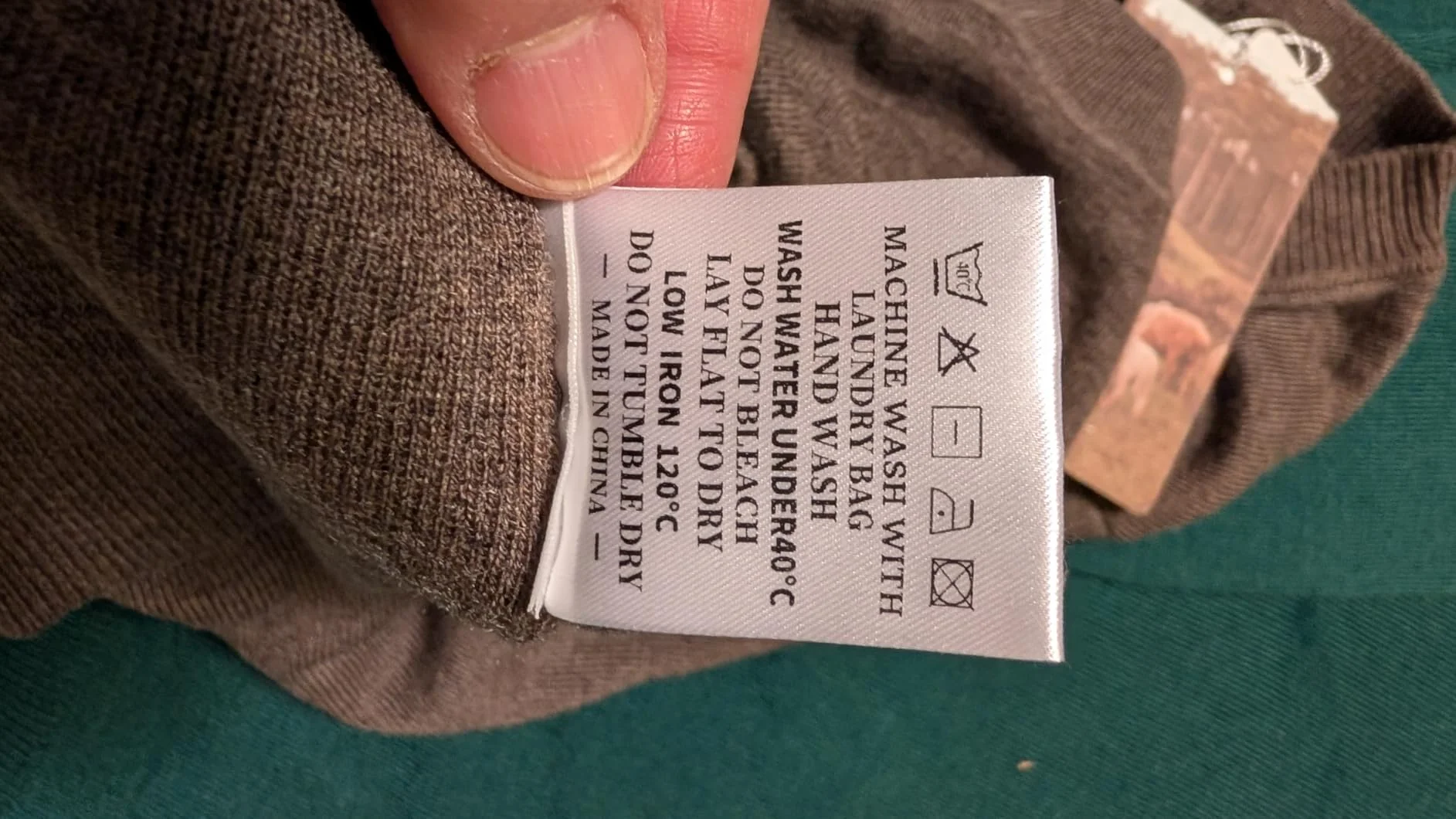
For the consumer evidence cases reflected in OFH-AUDIT-HFD3 and OFH-AUDIT-4LQJ, post-wash shrinkage was already reported as serious enough to affect wearability. Treat the care label seriously, and keep the heat out of the process.
Why Some Light-Colored Cashmere Sweaters Look See-Through and Feel Flimsy
A light-colored cashmere sweater should not behave like a thin curtain. Yet some shoppers find that the moment they put on a white, apricot, or purple knit, the outline of everything underneath becomes obvious—and the sweater feels so light and flimsy that it offers little protection when the temperature drops.
The problem is not always the color itself. Pale shades simply make a sparse knit much easier to expose. In OFH-AUDIT-GN7TQ, buyers reported serious see-through problems across multiple light-colored versions, including white, apricot, and purple. Another case, OFH-AUDIT-NM8H, was described by buyers as an extremely thin sweater that provided almost no warmth.
That creates a double disappointment: you pay for cashmere softness, then get the coverage and warmth of something far less substantial. A loosely made sweater can also lose its shape more easily as the knit relaxes with wear.
🔦 Shine a Light Through the Knit
Hold the sweater up in front of a phone flashlight or another strong light source. You are not trying to make cashmere completely opaque—lighter shades can naturally allow some light through. Instead, look for an unusually open pattern where the light passes straight through large gaps in the knit.
A better-made cashmere sweater uses a tighter construction that helps the fabric hold together and retain warm air close to the body. A thinner, more open knit has fewer layers working together, which can leave the sweater feeling less substantial and more prone to losing its original shape after repeated wear.
The difference matters because thinness is not automatically a sign of refinement. Fine cashmere can be lightweight without looking transparent, collapsing against the body, or leaving you shivering in cold air.
For the consumer evidence cases represented by OFH-AUDIT-GN7TQ and OFH-AUDIT-NM8H, buyers repeatedly connected extreme thinness with see-through fabric, poor warmth, and a cheap overall feel. If a pale sweater lights up dramatically under a simple flashlight check, the knit may be too open for anyone expecting meaningful coverage and insulation.
What Causes Sleeve Seams to Split the First Time You Try on a Sweater
The fastest way for a new sweater to lose all credibility is to tear before it has even survived its first outing. You pull it on, lift an arm, and suddenly the sleeve seam opens into a hole. At that point, the sweater has not been worn out—it has simply failed the first stretch of ordinary use.
One case linked to OFH-AUDIT-WJXS involved a sleeve seam that came apart completely during the first try-on. Another, OFH-AUDIT-HFD3, developed a large opening around the underarm seam after just one wash.
The weak point is often where the garment needs flexibility most. The underarm and sleeve seams move every time you reach, drive, carry a bag, or pull the sweater on and off. If the stitching cannot handle that normal movement, the fabric itself may be perfectly wearable while the seam gives up first.
🧵 Turn the Sleeve Inside Out Before Wearing
Before removing the tags, turn the sweater inside out and gently spread the underarm and sleeve seams with your fingers. You are looking for loose threads, visible gaps, uneven stitching, or sections that begin to separate with light pressure.
Then slowly flex the sleeve through a few normal movements. Do not yank it hard—the goal is to see whether ordinary handling already causes the seam to open. If threads start pulling apart before the sweater has been worn, imagine what repeated arm movement and washing can do.
Some low-cost construction relies on simpler stitching that has less room to move with the garment. Cashmere is soft, but the sweater still needs seams that can cope with bending and stretching. When the stitching is too weak or too rigid, repeated movement can concentrate the pull on a small section until the threads break.
That is why a seam failure can look so dramatic: one vulnerable line can suddenly become a hole large enough to expose the entire weak area.
The failures reported for OFH-AUDIT-WJXS and OFH-AUDIT-HFD3 do not mean every sweater will split, but they show how quickly poor seam construction can turn a brand-new knit into a repair project. A sweater that survives only until the first try-on has already wasted more than its purchase price—it has wasted the time you spent choosing it.
Does Longer Cashmere Fiber Prevent Excessive Pilling and Surface Fuzz?
A new cashmere sweater should not look three years old by lunchtime. Yet excessive pilling often starts exactly where the sweater experiences everyday friction: under the arms, along the sides of the waist, or anywhere a handbag repeatedly rubs against the fabric.
In the case tied to OFH-AUDIT-WJXS, buyers reported heavy pilling and loose fuzz after very little wear, with some describing the surface as so covered in lint and fiber balls that shaving the sweater did not fully restore its appearance. OFH-AUDIT-GN7TQ showed a similar problem, with severe pilling reported after the first wear of a navy version.
The reason is not mysterious: shorter loose fibers have more opportunities to work their way out of the yarn when the fabric rubs against itself. Once those ends collect on the surface, friction twists them into the familiar little balls that make a new sweater look prematurely worn.
Higher-grade cashmere is commonly associated with longer fibers—around 34 mm or more in the standard used here. Longer fibers can stay more securely within the yarn, leaving fewer loose ends available to rise to the surface. Shorter fibers, especially those under roughly 28 mm, can create a much fuzzier result after repeated rubbing.
✋ Rub the High-Friction Zones Yourself
Before buying, gently rub the underarm area and the side of the sweater between your fingers. Look closely at the surface. If loose fuzz immediately starts lifting away or small balls are already forming, that area may become even messier once it meets a seat belt, purse strap, or a full day of arm movement.
Do not expect a fabric shaver to solve every problem. It can remove the balls sitting on top, but it cannot stop more loose fiber ends from working their way out. When the underlying yarn keeps releasing fuzz, the cleanup can become a frustrating cycle.
The pilling reports for OFH-AUDIT-WJXS and OFH-AUDIT-GN7TQ show why fiber length matters beyond softness. A sweater may feel good in the fitting room and still lose its clean appearance quickly if too many short fibers are ready to escape.
For shoppers who want cashmere to stay polished through repeated wear, longer fibers and a smoother surface are worth checking before the first purchase—not after the sweater has already become a pilling project.
Proper Cashmere Storage: Why Hangers Stretch Shoulders and How Cedar Protects Against Moths
Cashmere storage is less about looking tidy and more about avoiding two slow forms of damage: stretched-out shoulders and holes that appear while the sweater is sitting untouched. Hanging a cashmere sweater through an entire season can leave raised shoulder bumps, while careless storage may create an unpleasant surprise when you unpack it months later.
Cashmere is a delicate natural fiber. The same softness that makes a sweater comfortable also means the garment can be vulnerable to shape changes when its own weight hangs from a narrow hanger for long periods. The physical weakness reflected in OFH-AUDIT-HFD3 is a reminder that once a delicate knit becomes misshapen or damaged, restoring its original appearance may not be easy.
Fold the sweater instead of hanging it. Smooth the sleeves inward, fold the garment loosely, and place it inside a breathable cotton bag rather than sealing it away where airflow is restricted.
Natural cashmere is also attractive to moths. A sweater that is stored without protection can become a food source, leaving small holes that may not be discovered until the next cold season. Clean storage matters, because food, skin oils, and other residue can make a stored garment more appealing to pests.
Use cedar blocks inside the storage area as an added protective measure. They can help create an environment that is less inviting to moths while allowing the sweater to remain folded and protected. Replace or refresh the cedar as its scent fades.
The basic rule is simple: fold, protect, and let the sweater breathe. Avoid storing cashmere under constant hanger pressure, especially for months at a time, and do not assume an untouched sweater is automatically a safe sweater.
Proper storage cannot reverse existing damage, but it can reduce the chance that a perfectly good cashmere sweater comes back next season with stretched shoulders, permanent distortion, or unexpected holes.
CONCLUSION
A good cashmere sweater needs more than a soft feel. Before buying, look closely at the knit, especially if the color is light, and check the sleeve and underarm seams before removing the tags. Run your fingers over areas that are likely to rub during normal wear and watch for loose fuzz.
Care also plays a major role after the purchase. Cold water, gentle washing, and flat drying can help protect the sweater from shrinkage and distortion. When the season ends, fold the sweater instead of hanging it for months, store it clean, and protect it from moths with suitable storage measures such as cedar. The goal is not to make cashmere indestructible. It is to recognize the difference between normal care needs and problems that suggest poor fabric, weak construction, or a sweater that may not last.
THE ULTIMATE BUYING VERDICT
| Verdict | Key Consideration | Recommendation |
|---|---|---|
| 🔴 Significant concerns | Severe shrinkage, extremely thin or see-through fabric, weak sleeve seams, and heavy early pilling can quickly ruin wearability | Avoid sweaters that show obvious gaps in the knit, loose seams, or loose surface fuzz before purchase |
| 🟡 Acceptable with limitations | Delicate cashmere can still change shape or shrink if washed, dried, or stored carelessly | Buy only if you are willing to hand wash, flat dry, and fold the sweater for storage |
| 🟢 Meets long-term expectations | A tighter knit, durable seams, smoother surface, and careful storage habits support better comfort, warmth, shape, and appearance | Look for a substantial knit, well-made seams, limited loose fuzz, and care requirements you can realistically follow |