
You buy a cashmere sweater expecting softness, warmth, and years of easy wear. Then it arrives itchy, so thin that light passes through it, or covered in pills after one day. The disappointment can get worse after washing, when the sweater shrinks, loses length, or develops damage around the seams. Some buyers also face strong odors that remain after repeated washing, while others find that an oversized fit looks bulky instead of relaxed.
The problem is not simply whether a sweater says "cashmere" on the label. The details behind the fiber, yarn, knit, fit, care, and overall quality matter just as much. Before paying a premium price, look beyond soft marketing words and check the signs that tell you how the sweater is likely to feel, fit, and hold up.
REPORTED ISSUES OVERVIEW
| Product Area | Common Problems | Why It Matters |
|---|---|---|
| Softness and feel | Itchy, scratchy, plasticky texture | A cashmere sweater may be uncomfortable against bare skin |
| Warmth and durability | Thin fabric, heavy pilling, loose seams | The sweater may leave you cold or look worn after very little use |
| Care and fit | Shrinkage, lasting odors, bulky oversized shapes | Washing or wearing the sweater can make an expensive purchase harder to use |
Why Cashmere Sweaters Under 19 Microns Feel Softer and Less Scratchy on Bare Skin
Cashmere is supposed to feel like a cloud against bare skin. If your sweater feels like plastic sandpaper instead, the problem is not something you should automatically blame on "sensitive skin."
One recurring complaint came from OFH-CASE-ZC333, where buyers across Beige, White, Dark Blue, and Haze Blue reported the same problem: persistent itchiness. Some described the material as plastic-like, fuzzy, or similar to old felt, with static electricity making the experience even worse.
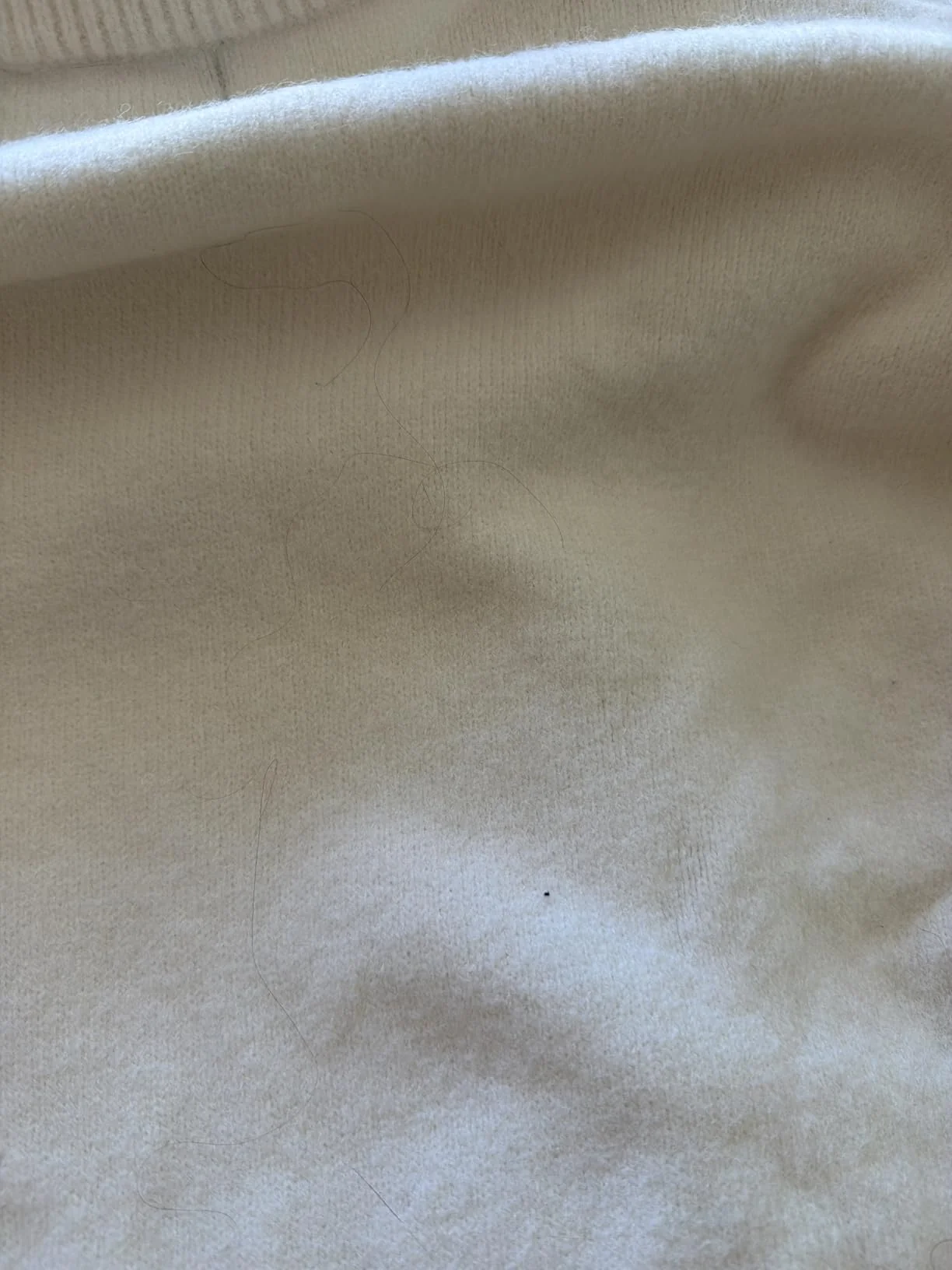
Another case, OFH-CASE-Z83T, pointed to a simpler issue: the sweater was so itchy that direct skin contact was difficult to tolerate. When a supposedly soft knit cannot sit comfortably against the body, the product has already failed one of the most basic expectations shoppers have for cashmere.
🖐️ Touch the Sweater Before You Commit
Press the fabric flat against the inside of your wrist, then slowly rub it back and forth. If the surface immediately feels prickly, stiff, plasticky, or scratchy, do not assume it will magically become soft after a few wears. The buyers behind OFH-CASE-ZC333 reported that the uncomfortable texture appeared across multiple color versions, suggesting the issue was not limited to one isolated shade.
Good cashmere does not need a dramatic sales pitch about being "luxuriously soft." Its most important clue is much simpler: the fiber should feel fine enough that your skin is not constantly aware of it.
The quality benchmark assigned to this category is a fiber diameter under 19 microns, especially for 100% pure cashmere. Finer fibers generally bend more easily against the skin instead of creating the rough, poking sensation associated with coarser fibers or lower-quality blends.
That distinction matters because softness is not just a hand-feel issue. A sweater can look fuzzy and expensive on a product page yet become irritating the moment you wear it directly over bare arms, your neck, or your chest.
For shoppers with sensitive skin, ask the brand to disclose the micron figure rather than accepting vague claims like "ultra-soft" or "premium feel." OFH-CASE-ZC333 is exactly why a close-up product photo is not enough when the real test happens against your skin.
The current feedback does not prove every unit in these product lines will feel the same, but the repeated itchiness reports are enough to justify caution. If a seller cannot clearly explain the fiber quality, lower your expectations before paying a cashmere-level price.
Can You Wear a Thin Cashmere Sweater in Winter Without Freezing?
"Lightweight" can sound like a luxury feature—right up until you step outside and the wind cuts straight through your sweater.
That is the gap exposed by OFH-CASE-NM8H, where buyers described receiving an extremely thin sweater that looked more substantial online than it felt in real life. The complaint was not simply about style. In cold weather, the wearer reported feeling close to freezing because the sweater offered little meaningful protection from the wind.
OFH-CASE-GN7TQ raised another red flag: the Apricot and Purple versions were reported as visibly sheer. When underwear shows through a sweater, that is not just an awkward wardrobe problem. It is also a warning that the knit may be too sparse to provide the warmth shoppers expect from cashmere.
🌬️ Hold It Up to the Window
Lift the sweater toward daylight and look through the body and sleeves. If strong light clearly passes through and you can easily see details behind the fabric, ask yourself what is going to stand between you and a cold winter wind.
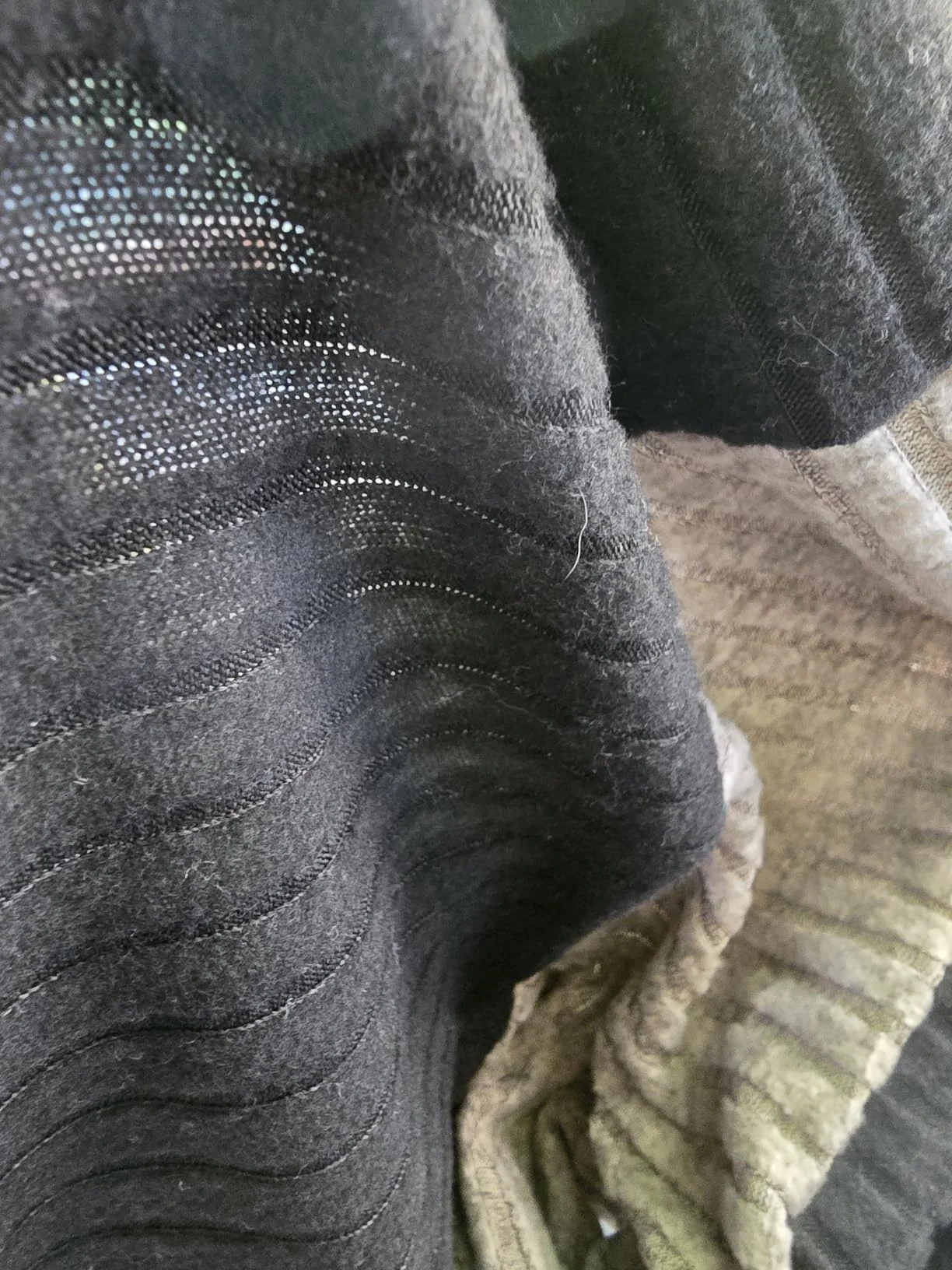
A lightweight sweater does not automatically mean a bad sweater. But "thin" and "warm" are not interchangeable. The cases behind OFH-CASE-NM8H and OFH-CASE-GN7TQ show why buyers should separate elegant lightness from a garment that simply does not contain enough material to do its job.
Pure cashmere keeps you warm by holding pockets of still air close to your body. Those tiny spaces help slow the loss of warmth. But when a sweater is knitted too sparsely, there is less material to trap that warm air and more opportunity for cold air to move through the garment.
That is why warmth should not be assumed just because a garment is labeled "cashmere." A good sweater can be light without feeling paper-thin, while an ultra-low-weight knit may sacrifice too much substance for a sleek product photo.
The buyer behind OFH-CASE-NM8H did not describe a refined layering piece; the complaint was that the sweater was so thin that it left the wearer cold. For winter shopping, treat extreme sheerness and a nearly weightless feel as practical warning signs rather than proof of premium breathability.
The current feedback does not mean every lightweight cashmere sweater will fail in cold weather. It does mean that, in the reported cases, "lightweight" appeared to come with a trade-off shoppers should have been able to see before wearing the sweater outdoors.
What Happens When Cashmere Shrinks in the Wash and How Much Length It Loses
You wash a sweater expecting it to come out clean. Instead, it comes out looking like it belongs to someone several sizes smaller.
That was the reality reported for OFH-CASE-HFD3 and OFH-CASE-4LQJ, where buyers described severe shrinkage after a single wash. The loss was not subtle: the sweater was reported to shrink to a dramatically smaller size, with the body becoming roughly 2–3 inches too short for the coverage the wearer expected.
The problem gets worse once the garment has been washed. A return that seemed possible when the sweater was new may become much harder after laundering, leaving the buyer with an expensive mistake sitting in the closet.
💧 Check the Care Label Before the First Wash
Before the sweater goes anywhere near a machine, read the care instructions and ask a basic question: Does the brand clearly tell you to use cold water and lay the garment flat to dry?
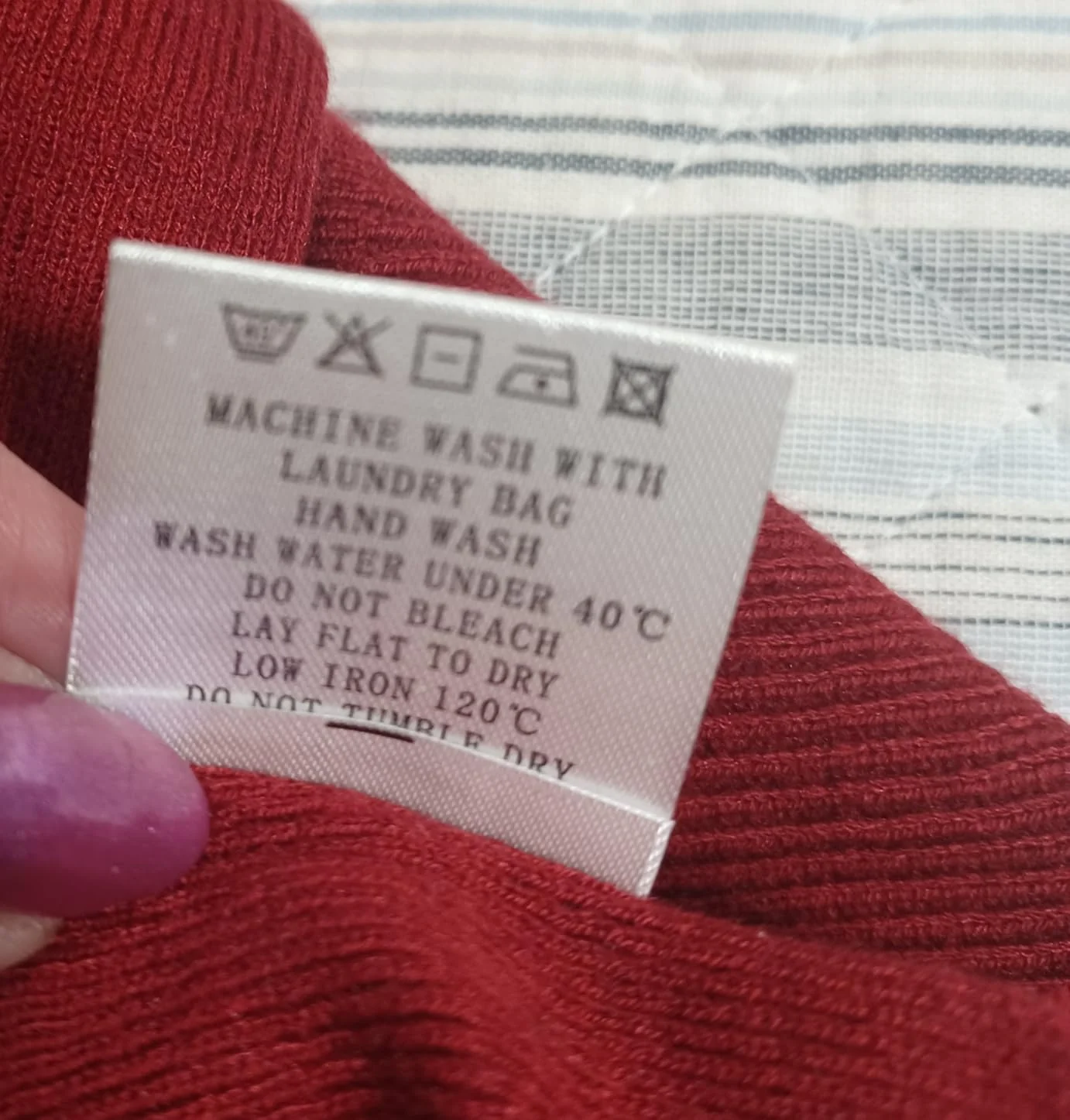
If those instructions are vague, missing, or easy to overlook, pause before washing. Cashmere is not the kind of sweater that always survives a normal laundry routine without consequences.
Cashmere fibers can tighten and lock together when exposed to heavy agitation or high heat. Once that happens, the change may be difficult to reverse. Tumble drying is especially risky: the quality guidance referenced in this section warns that shrinkage can exceed 15%, turning a normal sweater into a noticeably shorter and tighter garment.
That is why cold, gentle washing and flat drying matter. Hanging can distort the shape, while machine action and heat can leave the sweater smaller than the one you bought.
OFH-CASE-HFD3 is the uncomfortable reminder that "machine washable" assumptions can become very expensive. The buyer feedback described a single wash as enough to produce a dramatic size loss, including a sweater that no longer offered the intended length.
The lesson is not that every cashmere sweater will shrink after one wash. It is that a garment with poor resistance to washing mistakes—or unclear care instructions—can become a much riskier purchase once it leaves the package.
For the current reported cases, severe post-wash shrinkage is a practical warning sign. If the sweater requires cold water, gentle handling, and flat drying, the brand should make those requirements impossible to miss—not let you discover them after your sweater has already lost inches.
Why Armhole Seams Tear and Pilling Develops After Just One Day of Wear
A cashmere sweater does not need to survive a decade to prove it was well made. It should at least survive the first day.
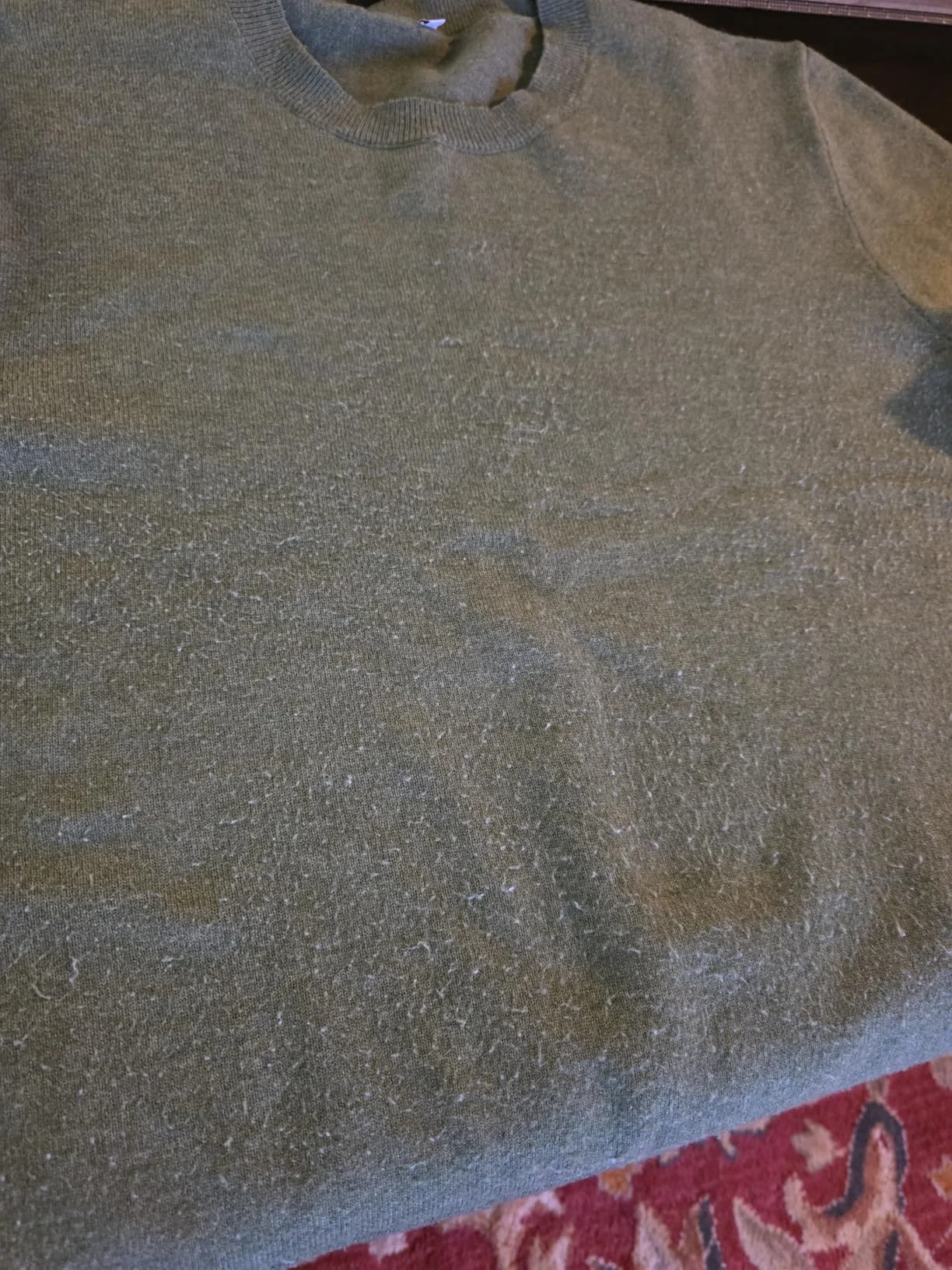
That basic expectation broke down in OFH-CASE-JXS, where one buyer reported a sleeve seam opening completely during the first wear. The same product also drew complaints about heavy pilling after minimal use, with loose balls of fiber becoming so persistent that shaving them off was described as nearly impossible.
The result is an expensive-looking sweater that can go from polished to exhausted before it has even earned a regular place in your wardrobe.
🔎 Turn the Sleeve Inside Out
Before wearing a new sweater, gently pull the fabric on both sides of the underarm and sleeve seam. Look for loose stitching, gaps, or yarn that separates with very little pressure. Then run your palm across the surface. If fibers are already lifting and forming fuzzy clusters while the sweater is still new, expect the appearance to deteriorate quickly.
OFH-CASE-HFD3 shows how little margin some garments may have. In the reported case, a hole appeared at the arm seam after a single wash, turning an ordinary cleaning cycle into visible damage.
The fiber quality behind a cashmere sweater matters because longer, stronger fibers can produce a smoother and more stable yarn. The quality guidance assigned to this section identifies 34 mm or longer as the target for Grade A cashmere. Shorter leftover fibers are more likely to work loose from the surface, while weak yarn and poorly finished seams leave high-stress areas with less room to survive stretching and movement.
That combination creates the exact kind of one-two failure reported in OFH-CASE-JXS: the seam gives way while the surface fills with pills. One problem attacks the sweater's structure; the other makes the garment look prematurely worn.
You should not need a fabric shaver after one outing, and an underarm seam should not turn normal arm movement into a stress test. These failures suggest that fiber quality, yarn stability, or stitching may have been pushed close to the minimum acceptable level in these reported cases.
The current complaints do not establish that every sweater from these listings will tear or pill at the same speed. But when a first wear produces both loose seams and heavy fuzzing, the sweater's long-term value becomes difficult to defend at any premium price point.
How to Deal with Factory Chemical Smells That Remain After Multiple Washes
A new cashmere sweater should smell like, well, a new sweater—not like a factory floor, stale cigarettes, or industrial chemicals.
The case behind OFH-CASE-NM8H is particularly hard to ignore. Buyers reported a strong factory-like chemical odor that remained even after four washes, making the sweater difficult to wear despite repeated attempts to clean it.
The complaints around OFH-CASE-4LQJ followed the same discouraging pattern. Buyers tried vinegar, fabric softener, dryer sheets, and even leaving the sweater in the sun. The sharp industrial or cigarette-like smell still refused to leave.
👃 Smell the Knit Before You Remove the Tags
Open the package and smell the sweater before washing it. Then smell the sleeves and inside areas where the fabric was tightly folded. If the odor is immediately strong, chemical-like, oily, or smoky, do not assume one wash will solve the problem.
A persistent odor can turn a simple purchase into a cycle of washing, soaking, airing, and trying again—while the sweater becomes harder to return.
For sensitive shoppers, the safest signal is clear certification. OEKO-TEX Standard 100 is one recognized textile safety standard used to screen certified products for a range of substances of concern. Its presence does not guarantee a garment will never have an odor, but a transparent safety certification gives shoppers more information than vague promises about "clean" or "premium" materials.
That matters because a smell that survives multiple cleaning attempts may be more than a packaging annoyance. It can indicate that residues or contaminants were not easily removed during ordinary home care. OFH-CASE-NM8H is the kind of case that should make buyers stop washing and start asking questions.
Repeated laundering also creates a second problem: cashmere itself requires gentle handling. Every extra attempt to remove the odor can put the sweater through more water, movement, and drying than delicate fibers are meant to tolerate.
The reported odor cases do not establish the exact source of the smell or prove that every garment without OEKO-TEX certification will have the same problem. But when a sweater still smells strongly after multiple washes and home remedies, the practical response is caution—not another round of hoping the next wash will finally fix it.
Plus Size Cashmere Sizing: How to Avoid Bulky, Boxy Fits in Oversized Sweaters
Oversized is supposed to look relaxed. It is not supposed to make a sweater feel like a sack with sleeves.
That distinction matters for plus-size shoppers looking for an easy, draped silhouette. In the complaints tied to OFH-CASE-Z83T, an XXL advertised with an oversized, boyfriend-style fit was reported as heavy, shapeless, and unflattering rather than relaxed.
One buyer compared the finished look to a lumberjack outfit. The sweater did not deliver the tunic or boyfriend silhouette expected from the product description, and the back reportedly had a square line that could not be removed.
👕 Look at the Shape, Not Just the Size Tag
Put the sweater on and check where the shoulder seam lands. Then look at the sleeves and sides in a mirror. If extra width is creating bulk everywhere while the garment still fails to drape naturally, sizing up may not be the answer.
A good oversized fit should create room without making the entire sweater look equally enlarged. For fuller figures, that difference can decide whether a cashmere sweater feels polished and easy or simply bulky.
OFH-CASE-Z83T is a useful warning because the problem was not that the sweater lacked fabric. The complaint was that the added volume failed to produce the relaxed shape buyers expected. More width alone can create a boxy result when the shoulders, sleeves, and overall proportions are not working together.
This is why plus-size cashmere shoppers should pay attention to the product photos from multiple angles rather than relying only on words like "oversized" or "boyfriend fit." Check whether the sweater falls naturally at the sides, whether the sleeves look proportionate, and whether the extra room creates drape instead of stiffness.
The current feedback is limited to the reported case and does not mean every XXL or oversized sweater will fit poorly. Still, OFH-CASE-Z83T shows how easily a promised relaxed silhouette can turn into an awkward, heavy-looking fit when the cut does not translate well to the body wearing it.
What Specifications to Look for in a Quality 100% Cashmere Sweater
By this point, the pattern is clear: "cashmere" on the label is not a complete buying specification. Across the reported issues in this guide, shoppers encountered sweaters that were itchy, see-through, prone to pilling, badly shrunken, poorly stitched, or impossible to deodorize.
So what should you actually look for when comparing a 100% cashmere sweater?
Start with the fiber claim itself. A quality listing should clearly identify the garment as 100% cashmere, rather than hiding behind vague luxury language that tells you nothing about what you are paying for.
Next, look for a stated fiber fineness of under 19 microns. This is one of the clearest specifications for shoppers concerned about softness, because finer cashmere is better suited to the smooth, less scratchy feel expected from a premium sweater.
Fiber length matters too. The quality guidance used here identifies more than 34 mm as a benchmark for Grade A cashmere. Longer fibers can help create a cleaner, more stable yarn, giving buyers a better starting point than marketing phrases such as "cloud-soft" or "luxurious touch."
Then check how the yarn is built. 2-ply or higher is a useful specification to look for when the listing provides it, particularly if you want a sweater that feels more substantial than the ultra-thin, sparse knits repeatedly criticized in the reported complaints reviewed above.
Finally, look for an OEKO-TEX certification if the brand claims to prioritize sensitive-skin or textile safety concerns. A visible certification is more useful than a generic promise that the sweater is "clean," "safe," or "eco-friendly."
The practical shortlist is simple:
100% cashmere. Under 19 microns. Over 34 mm fiber length. 2-ply or higher when disclosed. OEKO-TEX certification when available.
No single specification guarantees that a sweater will last for ten years, and brands do not always publish every detail. But these measurements give you something far more useful than a polished campaign photo: objective questions to ask before you invest in one of the best cashmere sweaters for women.
If a listing provides only glowing adjectives while avoiding the basic details that explain softness, yarn quality, or textile certification, comparison becomes guesswork. The strongest buying strategy is to reward transparency and treat missing specifications as information in their own right.
CONCLUSION
A careful cashmere purchase starts with looking past the word "luxury." Before buying, check whether the brand clearly states the fiber content and useful quality details such as micron level, fiber length, and yarn construction when available. Hold the knit to the light, inspect the seams, and look closely at how the sweater drapes on different body shapes.
It is also worth checking the care instructions before the first wash. A sweater that needs cold water and flat drying should make that clear. If a strong odor is present when the package arrives, smell the garment before removing the tags or washing it repeatedly.
The best habit is simple: reward brands that give clear information and make practical claims you can check. A good cashmere sweater should not force you to guess whether it will feel soft, keep you warm, survive normal care, or hold its shape.
THE ULTIMATE BUYING VERDICT
| Verdict | Key Consideration | Recommendation |
|---|---|---|
| 🔴 Significant concerns | Scratchy texture, extreme thinness, severe shrinkage, loose seams, heavy pilling, or odors that remain after repeated washing can make a cashmere sweater difficult to wear and maintain. | Avoid relying on the cashmere label alone. Inspect the sweater early and be cautious about removing tags or repeatedly washing a garment with serious problems. |
| 🟡 Acceptable with limitations | Lightweight or oversized cashmere can work well, but very thin knits may offer less winter warmth and extra room can become bulky when the cut does not create natural drape. | Choose these styles when their trade-offs fit your needs, and check transparency, shape, and intended use before buying. |
| 🟢 Meets long-term expectations | Clear 100% cashmere content, fine fibers under 19 microns, longer fibers over 34 mm, 2-ply or higher when disclosed, and visible OEKO-TEX certification are useful signs to look for. | Compare products using clear specifications and choose brands that provide enough information to judge softness, yarn quality, safety, and overall value. |