
A jacket can look great in the product photos and still become a problem the moment you try to wear it. The zipper may jam at the bottom. The cut may flare away from the body. A missing belt or someone else's belongings may turn up inside the pockets. In the worst cases, deep packaging creases may remain even after careful steaming.
These are not the kind of problems you discover by looking at color alone. They show up when you unzip the jacket, check the pockets, look at the shape from the side, and inspect how the material responds after unpacking. The reports in this article point to a simple lesson: before you decide to keep a jacket, check the parts that affect daily use. A careful inspection can reveal whether you received a jacket with a minor flaw or one that may not work as expected.
How Undersized Zipper Mechanisms Cause Closures to Jam at the Base Pin
You can forgive a jacket for needing a little break-in time. You cannot forgive a zipper that refuses to let you get dressed or undressed. The failure usually starts at the bottom: the pin will not slide cleanly into place, the slider reaches the base and jams, or the teeth lock up during the very first use.
That is what turned the units tracked as OFH-AUDIT-Y5QG and OFH-AUDIT-M7KV into immediate functional failures. In both cases, the zipper could not fully separate or open properly out of the box. The result is simple: the jacket has sleeves, pockets, and a collar, but the main entry system does not reliably work. After months of wear, reports for these same cases also described pockets tearing open.
⚙️ Pull the Zipper All the Way to the Base
Before removing the tags, open and close the zipper several times. Watch what happens at the bottom. If the slider catches, the teeth bite into each other, or the zipper needs force just to separate, stop pulling harder. A bad zipper can go from "slightly annoying" to permanently stuck with one stubborn yank.
A heavy motorcycle-style jacket needs hardware that can keep up with the garment's weight and repeated movement. Better builds commonly use YKK® metal zippers with a No. 5 size or larger and a properly fitted base pin, rather than a thin, poorly stamped part with sloppy alignment. When those pieces do not meet cleanly, the slider has little room for error, so the teeth can jam or come off track.
For this consumer evidence case, the matching first-use failures in OFH-AUDIT-Y5QG and OFH-AUDIT-M7KV are enough to raise a clear quality-control concern. If the zipper cannot release at the base when the jacket is new, the practical value of the whole garment drops to zero until that problem is fixed. Buyers who want dependable hardware should approach this particular case with caution.
Troubleshooting Boxy Fits and Unnatural Flaring Along Lower Waistlines
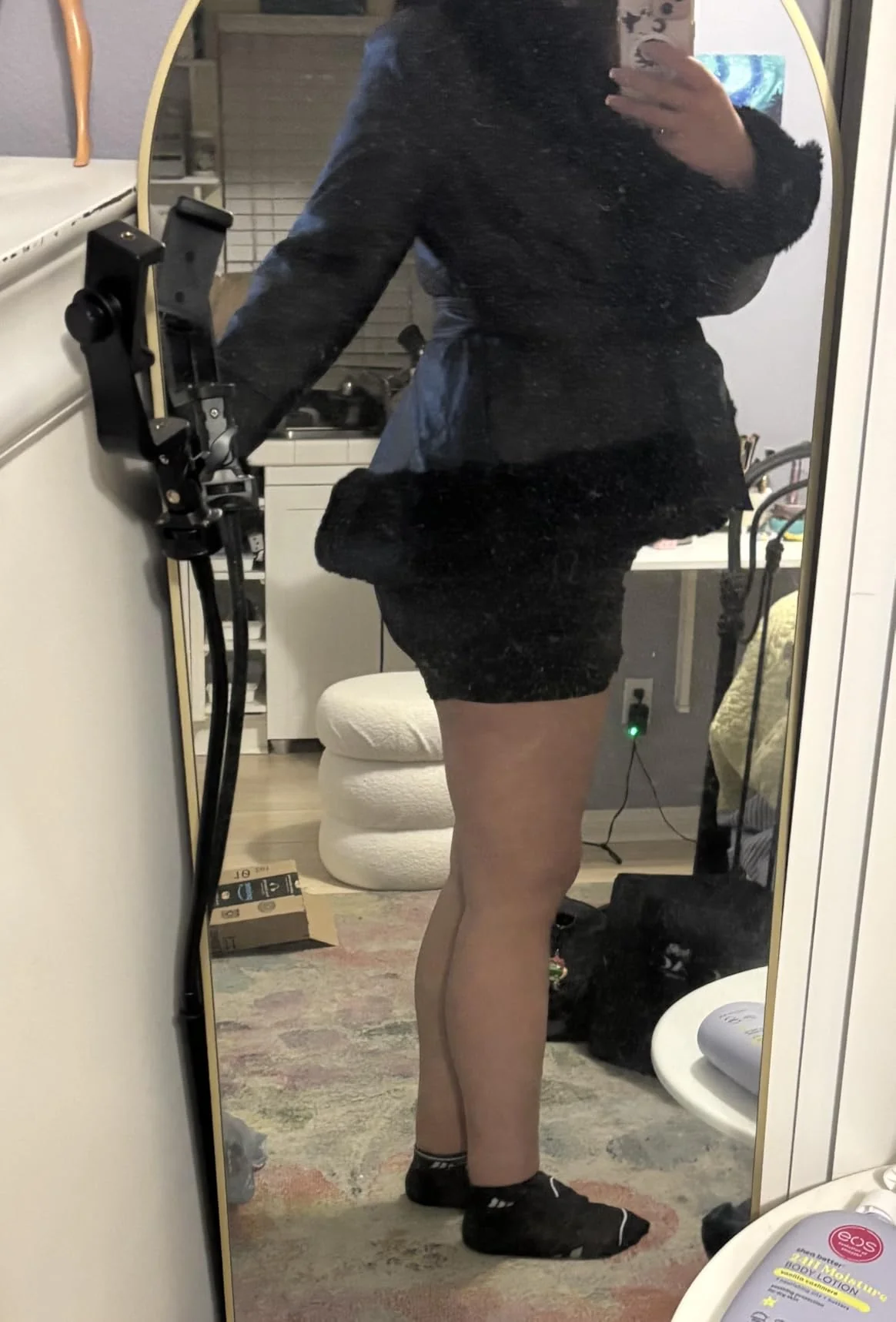
A leather jacket can be oversized without looking like a rigid cardboard box. The problem starts when the shoulders droop, the body stays straight, and the lower hem kicks outward instead of following the shape of the wearer. What should read as relaxed volume can quickly turn into a barrel-shaped silhouette with no waist definition.
The clearest example came from OFH-AUDIT-V531, where the lower edge reportedly flared so dramatically that one buyer compared the shape to a hula hoop. OFH-AUDIT-6MM2 showed the opposite kind of imbalance: overly loose sleeves paired with a narrow torso and a straight up-and-down cut. Meanwhile, OFH-AUDIT-Y5QG was described as bulky and unflattering once worn.
🧥 Look for the Shape at the Side Seams
Lay the jacket flat, then follow the lines from the underarm to the hem. A well-shaped women's leather jacket should show deliberate changes in direction through the chest and waist rather than dropping straight down like a tube. Also check whether the lower edge lies naturally flat. If it pushes outward before the jacket is even being worn, that flare may become much more obvious on the body.
Leather does not automatically hug the body the way a soft knit can. The shape has to be built into the cut. Better construction uses curved pieces and purposeful paneling to leave room for the bust, bring the body inward around the waist, and still allow the arms to move.
That is why calling every shapeless jacket "oversized" can be misleading. A successful oversized silhouette still looks intentional. A failed pattern simply adds width where it does not belong, then leaves the wearer with a stiff tube through the middle and an exaggerated lower edge.
For the consumer evidence case represented by OFH-AUDIT-V531, the reported hula-hoop flare is a practical warning sign rather than a styling preference. If the hem pushes away from the body while the waist has no natural shape, the jacket may be hiding a basic pattern problem behind the oversized label.
What Uninspected Pockets and Missing Accessories Reveal About Returned Inventory
Few things kill the "new jacket" experience faster than reaching into a pocket and finding someone else's leftovers. One moment you are opening a fresh package; the next, you are wondering who wore the jacket before it was folded back into the bag.
The reports tied to OFH-AUDIT-V531 were especially difficult to ignore. Buyers described finding an unopened sanitary pad, used makeup, and dirty gloves inside the pockets, while the belt expected with the jacket was missing. OFH-AUDIT-K8R4 produced a similar picture: an old napkin and used sunglasses were reportedly left behind, along with visible stains and another person's perfume.
🔍 Empty Every Pocket Before You Wear It
Run your hand through every pocket, check the lining, and look for stains around the cuffs, collar, and opening. Then confirm that every advertised accessory is actually in the package. A missing belt is not a tiny detail if the jacket was designed around it.
These reports do not prove exactly how each item reached the customer, but they point to one obvious problem: basic checks may have been skipped somewhere between return and resale. A returned garment can still be perfectly sellable when it has been properly inspected and repackaged. It should not arrive with another customer's personal items still hidden inside.
When the same consumer evidence case shows forgotten belongings, visible wear, strong perfume, and missing accessories, the buyer is no longer judging a simple manufacturing defect. They are judging whether the item received the basic handling expected of merchandise being sold as new.
For the consumer evidence cases represented by OFH-AUDIT-V531 and OFH-AUDIT-K8R4, the reports suggest inconsistent control over returned inventory. If a "new" jacket still contains someone else's belongings, treat the rest of the package as something worth checking very carefully before wearing it.
Can Deep Packaging Creases Be Removed from Synthetic Outerwear?
Some packaging wrinkles disappear after a few hours. Deep vacuum creases are a different problem. When a jacket has been compressed and folded too tightly for too long, the surface can come out looking permanently crushed, with sharp lines or a web-like pattern running across the material.
That was the reported experience with OFH-AUDIT-V531. Repeated attempts with a commercial garment steamer reportedly failed to smooth out the vacuum folds. OFH-AUDIT-6KSZ showed a similar issue, arriving with severe wrinkles that buyers described as impossible to restore.
♨️ Check One Crease Before Adding More Heat
Hang the jacket and let it relax naturally first. If a deep fold remains unchanged, do not keep blasting the same area with hotter and hotter steam. High heat can make a damaged synthetic surface look worse, not better.
The problem is that compressed synthetic outerwear does not always bounce back after the package opens. A long, hard fold can leave the material holding the shape of the package itself. Once that happens, treating the crease like an ordinary wrinkle may not solve the problem, and aggressive heat can risk further surface damage.
That is why "just steam it at home" is a poor excuse when the packaging has already left a permanent mark. A light crease is one thing; a jacket that remains visibly distorted after professional steaming is another.
For the consumer evidence case represented by OFH-AUDIT-V531, the failed steaming attempts suggest the damage was not merely cosmetic packing wrinkling. If deep creases survive repeated gentle treatment, the jacket may have been compromised before it ever reached your closet.
CONCLUSION
The most useful time to inspect a jacket is before you wear it outside or remove anything needed for a return. Start with the zipper and make sure it opens and closes smoothly from the base. Then check the cut on your body and look for an unnatural flare at the lower edge. Empty every pocket and confirm that the package includes all advertised accessories.
Packaging also deserves attention. Give the jacket time to relax, but do not assume that every deep crease will disappear with more heat. If careful treatment does not improve the material, pushing harder may only make the surface worse.
The goal is not to find a perfect jacket. It is to separate small cosmetic issues from problems that affect function, fit, handling, or long-term satisfaction. A few minutes of checking can make the difference between keeping a jacket you enjoy and discovering serious problems after it is too late.
THE ULTIMATE BUYING VERDICT
| Verdict | Key Consideration | Recommendation |
|---|---|---|
| 🔴 Significant concerns | Zippers that jam at the base, deep creases that remain after careful treatment, and packages containing another person's belongings or missing accessories can make the jacket difficult to use or question its condition. | Inspect the zipper, pockets, accessories, and material immediately. Consider returning the jacket if the main closure does not work properly or the condition does not match a new item. |
| 🟡 Acceptable with limitations | A boxy or oversized cut may be wearable, but a lower hem that pushes far away from the body or an uneven fit can make the jacket look bulky or unflattering. | Accept the fit only if the shape works for your body and the flare looks intentional when worn. Check the side seams and lower edge before deciding to keep it. |
| 🟢 Meets long-term expectations | A desirable jacket has a reliable zipper, a cut that looks intentional, clean and empty pockets, complete accessories, and packaging creases that improve without harsh treatment. | Look for smooth daily function, a balanced shape, proper product handling, and a material that returns to its normal appearance after unpacking. |