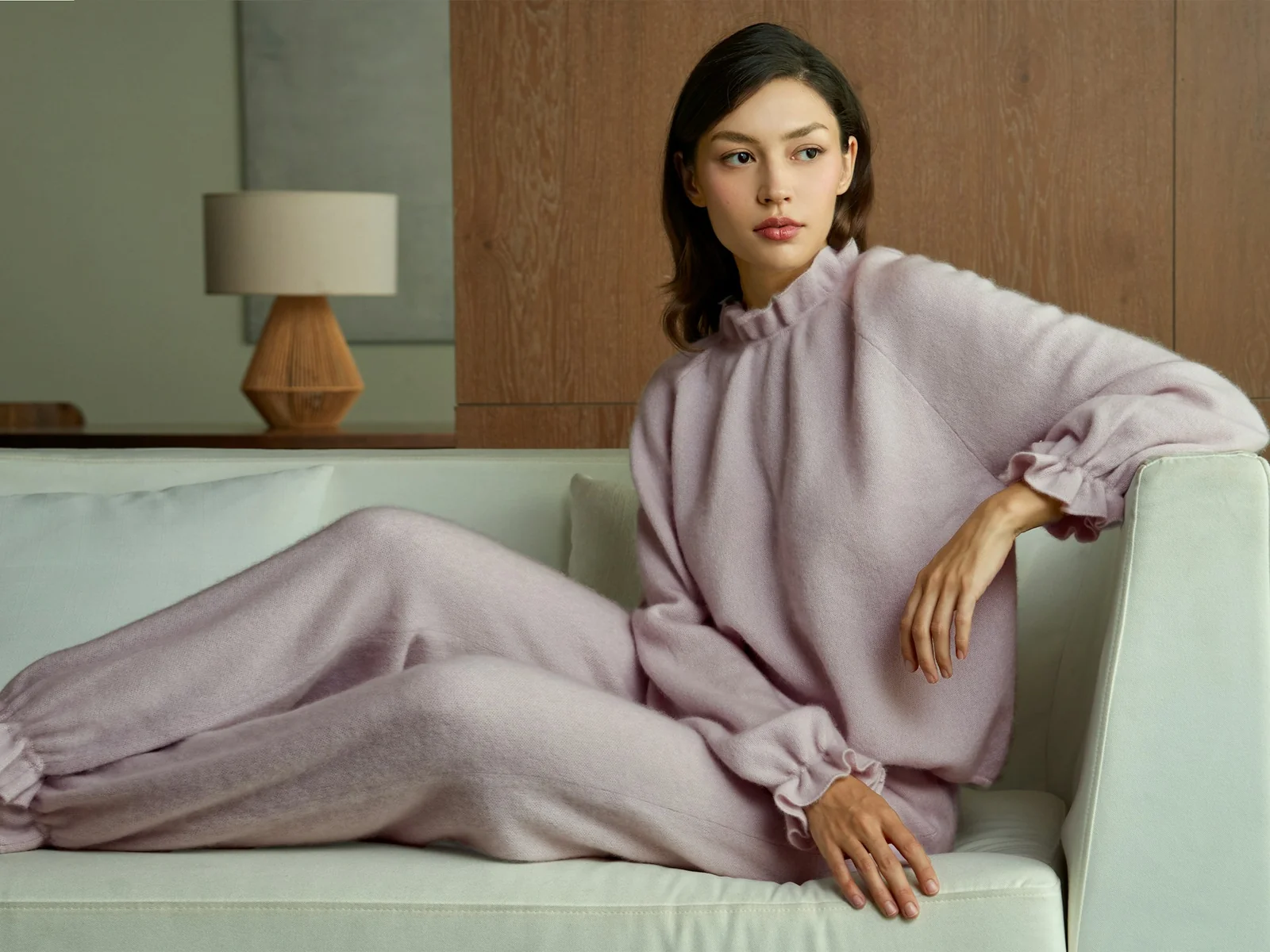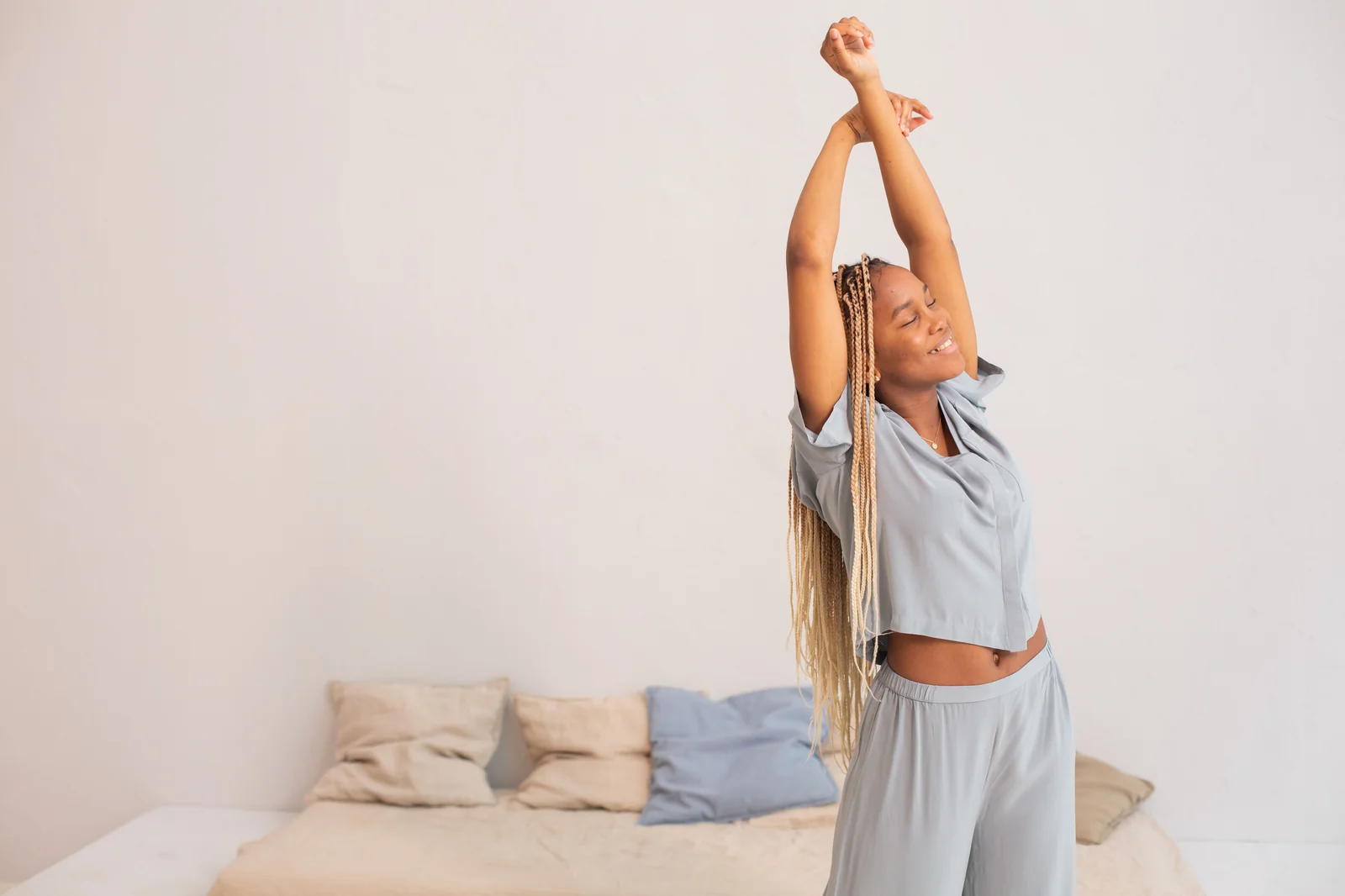
You can buy a loungewear set in your usual size, check that the waistband fits, and still discover that almost everything else is wrong. The pants may drag across the floor, the top may hang far too loose, the sleeves may feel tight, or the rise may pull in uncomfortable places. For plus-size buyers, the problem can become even more confusing when an XXL fits smaller than expected while another size runs much larger.
These are not problems that a size label alone can prevent. Fit depends on inseam length, rise depth, rear coverage, and how the top and bottom work together. A careful buyer should treat the listed size as a starting point and pay closer attention to measurements and proportions before removing the tags.
How Inseam Length Discrepancies Create Hemming Problems for Different Heights
Nothing ruins a relaxed set faster than pants that turn into a floor-length cleaning rag. A buyer can choose the right waist, get the right hip fit, and still end up with several inches of fabric dragging behind every step.
One anonymized case, OFH-AUDIT-68P4, reported pants running 4 to 12 inches too long, with one buyer forced to remove more than a foot of fabric. Another case, OFH-AUDIT-1TW4, showed that the same size in different colors could differ by 3 inches in length. That is not a minor preference issue when the pants are already supposed to fit straight out of the package. The practical consequence is obvious: shorter buyers get excess fabric bunching around the ankles, brushing the floor, or sliding under their feet. The supposed bargain can quickly become a tailoring expense, while the original shape of the hem may disappear after alterations.
🔍 Compare the Hem Before Removing the Tags
Put the pants on with the shoes or slippers you would normally wear. Stand naturally, then look at where the hem falls without rolling, cuffing, or holding the waistband higher than intended.
If the fabric pools heavily on the floor, the problem is not solved by simply hiking the pants up to the waist. Check whether the rise and waistband are still sitting where they should. If fixing the length requires shifting the entire garment upward, the proportions are already working against your body.
The deeper problem is that many size charts treat body width as the main fit variable while offering little clarity about height-based length options. For a buyer who needs a petite loungewear set or a more reliable tall fit, one standard inseam can leave very little room for error.
A garment that needs major hemming before it can be worn is no longer delivering the convenience promised by ready-to-wear clothing. The current feedback around these listings suggests that inseam measurements and color-to-color consistency deserve a close look before trusting the listed size alone.
Why Matching Loungewear Sets Sometimes Fit Differently on Top and Bottom
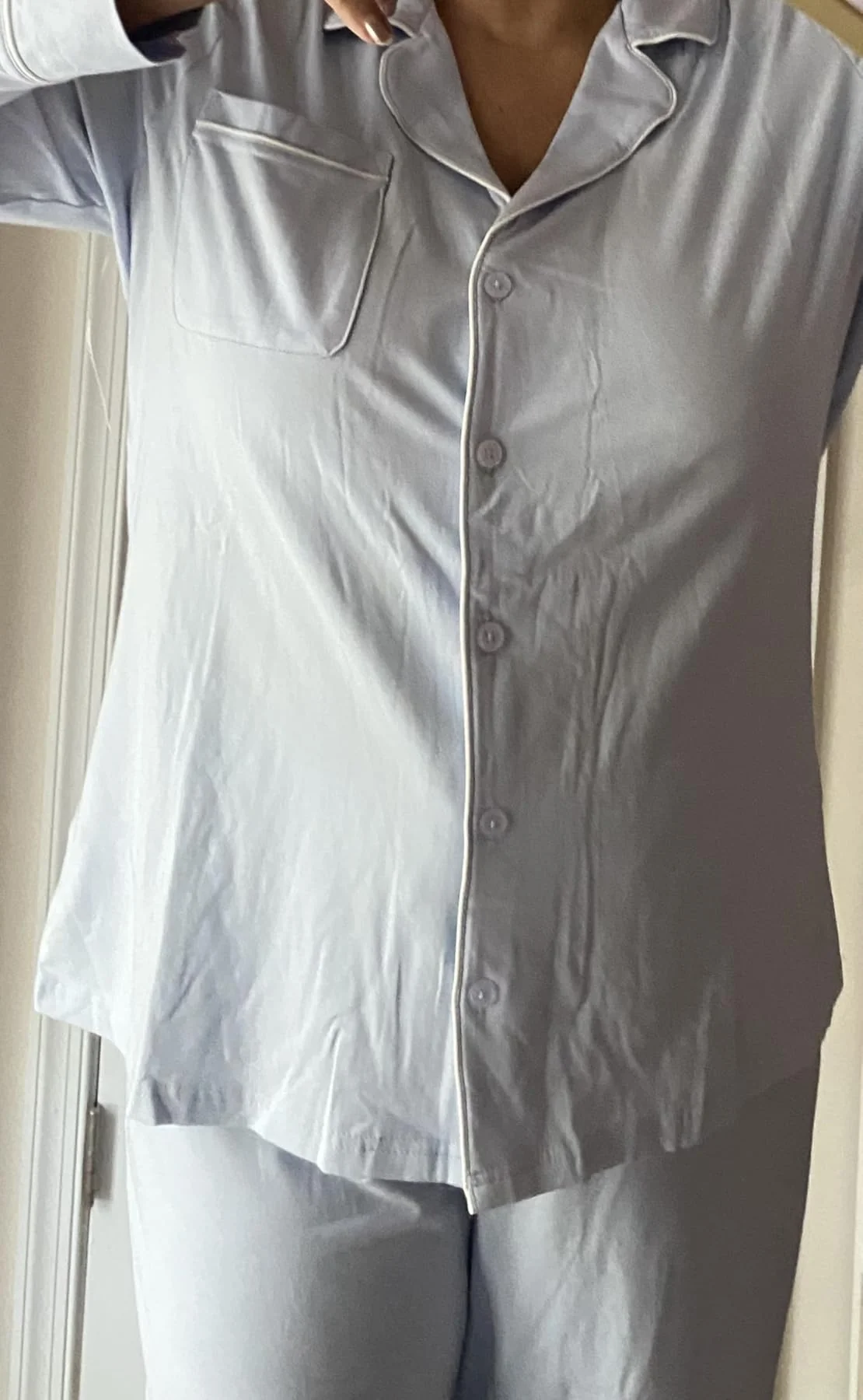
A matching set is supposed to remove the guesswork. Instead, some buyers end up with a top hanging like a sack while the pants squeeze the waist and pull at the crotch—all with the exact same size printed on both pieces.
The problem is that a shared size label does not guarantee a shared fit. OFH-AUDIT-2K65 reported a top that was too large while the matching pants were too short. In OFH-AUDIT-WBN1, the sleeves were too tight even as the torso ran too long, leaving the set with conflicting proportions instead of one consistent fit. That mismatch matters because the pieces are sold as one outfit. When the top and bottom appear to have been sized around different body shapes, buyers can end up choosing between two bad options: size up and drown in the shirt, or size down and make the pants even tighter.
📏 Hold Both Pieces Up Together Before Wearing
Before washing or removing the tags, lay the set flat. Compare the visual proportions instead of checking the size label alone. Does the top look dramatically wider than expected for the pants? Do the sleeves feel restrictive while the body is unusually long? Does the waistband fit while the rest of the pants clearly do not?
Those contradictions are worth noticing early because they usually cannot be fixed with a simple hem or waistband adjustment. Altering one piece may improve one problem while making the supposed "matching" proportions look even more disconnected.
For buyers who want a polished loungewear set rather than two unrelated garments bundled together, the top and bottom should be judged as one outfit. The size label is only the starting point; the actual question is whether both pieces make sense on the same body.
The current feedback suggests that some listings struggle with consistent proportions across the full set. When one piece fits while the other does not, the "same size" claim may be much less useful than the measurements printed on the page.
How Inadequate Rise Depth and Rear Coverage Cause Fit Issues in Lounge Pants
Some lounge pants manage the rare trick of fitting the waist while failing everywhere that actually needs room to move. Pull them up, and the fabric crowds the crotch, creates an awkward crease, and starts tugging in places nobody wants highlighted.
One anonymized case, OFH-AUDIT-1TW4, described high-rise pants that could be pulled almost to the ribs, yet the crotch still created a large, uncomfortable wrinkle. Another, OFH-AUDIT-FCC8, reported that the pants simply did not leave enough room through the back. That is the flaw hidden behind the phrase "one universal fit." A waistband can be stretchy and the size label can be correct, but if the pants do not allow enough room through the rise and seat, the garment starts fighting the body the moment you sit, bend, or walk.
👖 Sit Down and Check the Back
Put the pants on normally and sit for a few seconds. Then stand, bend slightly, and notice what the fabric does around the crotch and seat.
If the crotch pulls tight, the pants shift upward, or the back keeps sliding down, do not assume you simply need a larger size. A bigger waist may only create a looser waistband while leaving the same badly placed shape underneath.
A better-fitting pattern follows the body's natural curves instead of treating the front, crotch, and rear as one flat tube. When that curve is too shallow, the fabric has nowhere to go except inward or upward—producing pinching in front and unreliable coverage in back.
For lounge pants, this matters even more because sitting and moving are the whole point. A pair that feels fine during a two-minute mirror check can become uncomfortable after an hour on the couch.
The current feedback from OFH-AUDIT-FCC8 and OFH-AUDIT-1TW4 shows why rear coverage and rise shape deserve as much attention as waist size. If the pants cannot stay in place without constantly being pulled, adjusted, or yanked back into position, the listed size is only telling part of the story.
Why Plus-Size Loungewear Sizing Often Runs Significantly Smaller Than Labeled
Plus-size shopping becomes expensive fast when the size chart sends you in one direction and the actual garment sends you straight back to the return counter.
One anonymized case, OFH-AUDIT-68P4, reported an XX-Large that was too small for a buyer who normally wore a 2X, while an XL was reported as far too large for another buyer. OFH-AUDIT-2K65 also reported an XXL garment arriving much smaller than expected. That kind of size reversal creates a particularly frustrating situation for plus-size buyers: going up a size is no longer a reliable solution because the proportions may become inconsistent in completely different directions. A label can say XXL while the actual room through the body tells a very different story.
📐 Measure the Garment, Not Just the Tag
Before washing, lay the garment flat and compare its actual width and length with a loungewear piece you already own and trust. Focus on the areas where the fit matters most: chest, waist, hips, and thighs.
If a supposedly larger size offers barely any extra room—or if one dimension suddenly becomes oversized while another stays restrictive—the issue may be the grading of the pattern rather than your body.
Proper plus-size loungewear should not simply feel like a smaller garment enlarged in every direction. Bodies do not grow in a perfectly uniform straight line, so a size range that only stretches the original proportions can produce a top that feels enormous in one area and pants that still refuse to accommodate another.
This is why the size label should be treated as a starting point, not a promise. For plus size loungewear and women's plus size loungewear, reliable measurements and consistent proportions matter far more than an impressive-looking size range.
The current feedback around OFH-AUDIT-68P4 and OFH-AUDIT-2K65 points to meaningful inconsistency in these listings. When the tag and the actual fit disagree, the problem is not automatically your body—the sizing system may simply be giving you the wrong map.
CONCLUSION
Good loungewear should not require a buyer to guess whether the label can be trusted. Before washing or removing the tags, try the full set on and move naturally. Sit down, bend slightly, and check whether the pants stay in place without pulling or sliding. Look at the hem with the footwear you normally use, and compare the top and bottom as one outfit rather than judging each piece separately.
For plus-size shoppers, measuring a trusted garment at home can also be more useful than relying only on labels such as XL or XXL. Pay attention to chest, waist, hips, thighs, inseam, and overall proportions. When the fit is inconsistent across colors or sizes, do not assume the problem is your body. Reliable loungewear should make daily comfort easier, not turn a simple matching set into a return or alteration project.
THE ULTIMATE BUYING VERDICT
| Verdict | Key Consideration | Recommendation |
|---|---|---|
| 🔴 Significant concerns | Major length differences, conflicting top-and-bottom proportions, and poor rise or rear coverage can make the set difficult to wear comfortably | Avoid trusting the size label alone; check measurements and fit before removing tags or washing |
| 🟡 Acceptable with limitations | A garment may work for some buyers even if the inseam is too long or one piece fits better than the other | Consider it only if the problem is minor and can be reasonably managed without ruining the intended fit |
| 🟢 Meets long-term expectations | Consistent measurements, balanced proportions, comfortable rise depth, reliable rear coverage, and enough room through the body support everyday wear | Look for a set that fits naturally in both pieces and stays comfortable when standing, sitting, bending, and moving |