
A new pajama set can look perfect in the listing photos and still create problems once it reaches your home. A fabric advertised as silk, satin, or modal may have a very different fiber label. A dark set may leave color on white sheets. A light fabric may be far more see-through than expected. Even basic details such as seams, buttons, arm openings, and pant length can make sleepwear uncomfortable or hard to use.
The same problems can appear before the first wear. Strong odors, stains, heavy wrinkles, or signs of rough handling can make buyers question whether the garment was properly checked before shipping. Care matters too: delicate silk and cashmere can shrink or lose their shape when exposed to high dryer heat.
These checks take only a few minutes, but they can reveal whether a pajama set is ready for real life.
DEFECT AUDIT OVERVIEW
| Product Area | Common Problems | Why It Matters |
|---|---|---|
| Fabric and color | Fiber labels that do not match the listing, rough inner surfaces, strong odors, and dark dye transfer | The material touches your skin for hours and may affect comfort, bedding, and how the garment can be used |
| Construction and fit | Split seams, loose buttons, damaged buttonholes, zero stretch, tight arm openings, and excessive pant length | Poor construction or fit can make pajamas uncomfortable, difficult to move in, or unusable |
| Condition and care | See-through fabric, stains, unusual packaging condition, and high-heat drying | These problems can reduce privacy, raise concerns about the garment's condition, or permanently change its fit and feel |
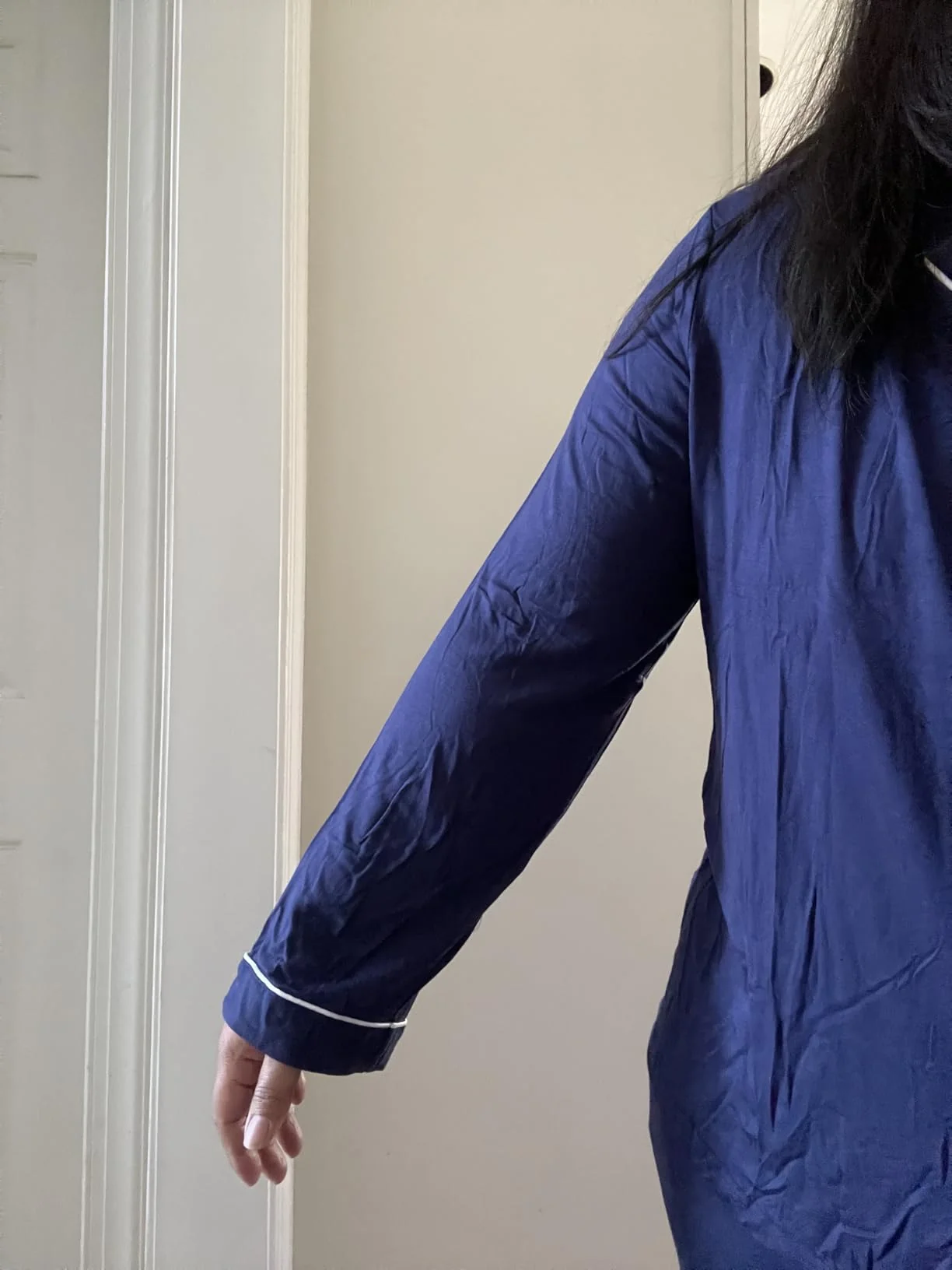
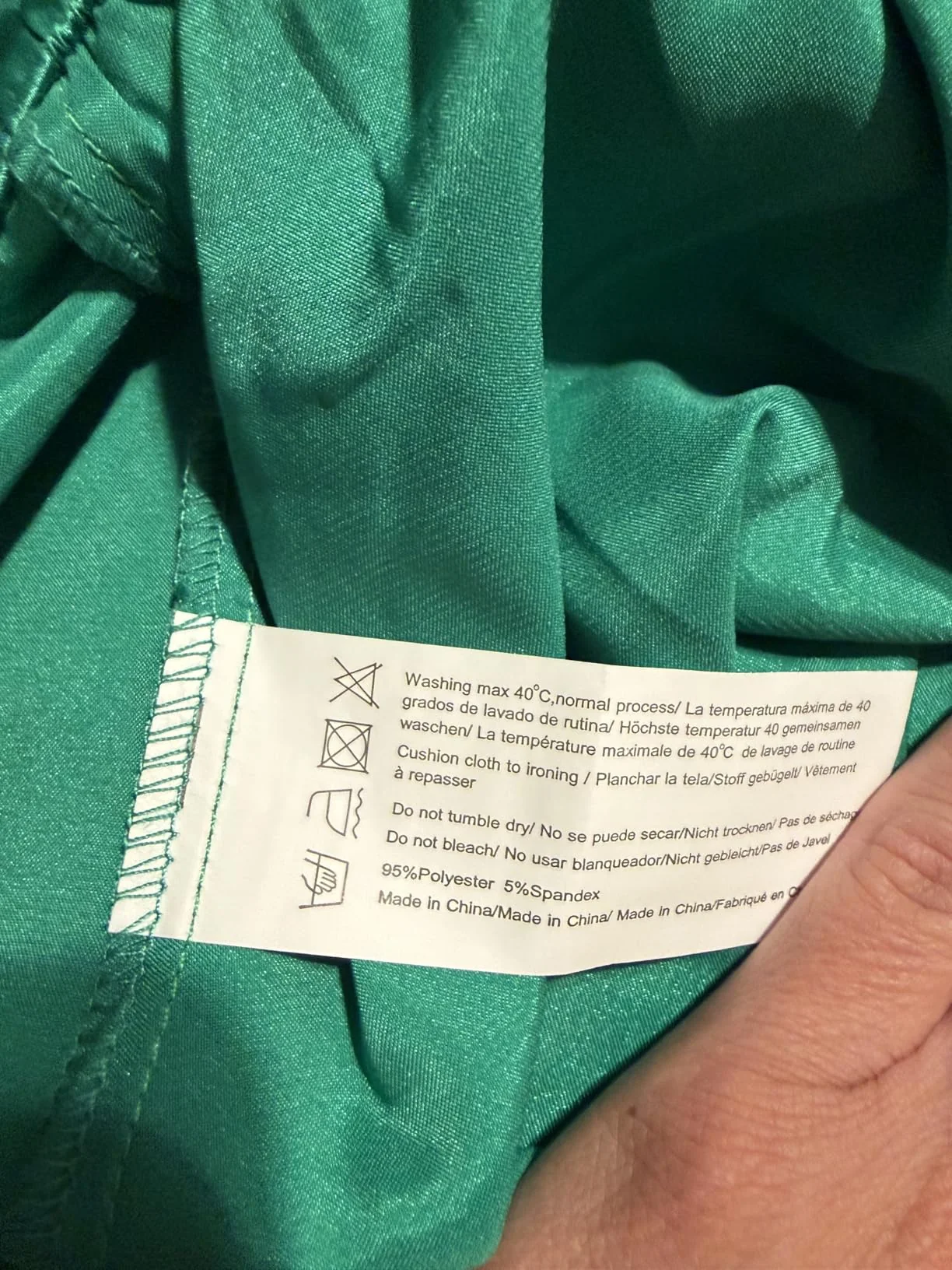
Why Polyester Blends Sold as Silk Can Cause Skin Rash and Irritation
A label that says "silk," "satin," or "modal" is not much comfort if the fabric against your skin tells a completely different story. The problem is not simply that a synthetic blend feels less luxurious. When buyers expecting a soft natural fabric receive a garment with a very different fiber mix, the consequences can include itching, burning heat, and raised red welts.
One recurring case involved OFH-AUDIT-4JD11. The garment was described as containing mostly modal, yet users reported a label showing 65% polyester, 35% rayon, and 5% spandex. Multiple wearers described the inside as scratchy, while one reported group involved 12 teenagers who developed itching and red welts after wearing the pajamas.
That does not mean polyester automatically causes a rash in every wearer. The bigger warning sign is the combination of a material claim that does not match the label, a rough feel, and repeated reports of skin reactions. When someone buys sleepwear expecting modal or silk-like softness, a surprise synthetic blend can turn an ordinary night in bed into an unwelcome guessing game about what is irritating their skin.
⚠️ Touch the Inside Before You Wear It
Run your hand firmly across the inside of the garment before washing or sleeping in it. If the outer surface feels soft but the inner side feels rough, plasticky, or scratchy, do not assume it will become comfortable once it warms up against your skin. Check the sewn-in composition label as well, especially when the product listing relies heavily on words such as "silk," "satin," or "modal."
For sensitive skin, an additional layer of reassurance can come from a recognized textile safety certification such as OEKO-TEX, which is intended to screen certified textiles for harmful substances. In the reviewed material, OEKO-TEX certification is specifically presented as a safety signal for products intended for sensitive skin.
The practical takeaway is simple: do not judge sleepwear by the marketing word on the front of the listing. Read the fiber label, feel the side that actually touches your body, and treat repeated reports of itching or welts as a reason to stop wearing that specific garment and reassess the material. For this case, the reported reactions and composition discrepancies are enough to justify extra caution.
Strong Odors and Chemical Residues in New Pajamas: Health Risks to Watch For
A new pair of pajamas should not make the first step after opening the package "get some fresh air." Yet that was the problem reported with OFH-AUDIT-5QY7: buyers described a strong, unpleasant odor immediately after unboxing, while the reviewed product evidence recorded 30 ppm formaldehyde and 131 ppm VOCs before washing.
For sleepwear, that matters because the fabric sits close to the body for hours at a time. Users in the reviewed pain-point data specifically raised concerns about strong chemical odors, with the reported scenario also linking those odors to dizziness and breathing discomfort.
Washing may improve the smell, but a weaker odor is not the same thing as proof that every concern has disappeared. In the same case, the odor was only partially improved after washing, which is why a heavily scented or sharply chemical-smelling garment deserves more than a quick rinse and blind optimism.
👃 Smell the Fabric Before You Sleep in It
Open the package and smell the pajamas before wearing them. A faint warehouse or packaging smell is one thing. A strong, sharp odor that immediately makes you want to put the garment down is another reason to pause.
If the smell is concentrated in the fabric rather than the outer packaging, avoid assuming that perfume, fabric softener, or repeated washing will automatically solve the underlying issue. Set the garment aside instead of wearing it overnight, especially if the odor causes noticeable discomfort.
This is also where recognized textile safety certification can be useful. The reviewed material identifies OEKO-TEX certification as a sign that a textile has been screened for harmful substances and may provide additional reassurance for sensitive skin.
The key point is not that every new garment with an odor is unsafe, or that every synthetic fabric will create the same problem. But when a strong chemical smell appears alongside reported chemical concerns in a specific case, the safest response is not to ignore it because the pajamas were cheap, attractive, or already washed once.
For OFH-AUDIT-5QY7, the combination of the reported odor and the referenced measurement results is enough to justify caution. A new pair of pajamas should feel ready to wear—not like something that first needs a debate about whether the smell will eventually disappear.
What Causes Dark Dye to Bleed onto Furniture and Sheets During Wear
Dark pajamas are supposed to stay on the pajamas. When black or deep-colored dye keeps transferring onto sheets, furniture, or other fabrics, the result is a mess that can outlive the garment itself.
That pattern appeared in OFH-AUDIT-JVS6 and OFH-AUDIT-5QY7. Buyers reported dark dye continuing to transfer after washing, including one case in which black color permanently stained a white leather chair. Other reports described dye bleeding onto bedding and nearby fabrics.
The immediate problem is simple: if color comes off during normal wear or repeated washing, your pajamas can become an expensive source of unwanted redecorating. White sheets, light upholstery, and other absorbent surfaces are especially vulnerable because the transferred color can be difficult to remove once it sets.
🛋️ Look at the Inside Before It Touches Your Sheets
Before wearing a new dark pajama set to bed, rub a small hidden area of the fabric against a clean white cloth or paper towel. If visible color comes off, do not assume the problem will disappear after one wash.
Wash the garment separately first, then check the rinse water and the fabric again. If the dye continues to migrate after repeated washing, keep it away from white bedding, light-colored furniture, and expensive upholstery.
For the cases represented by OFH-AUDIT-JVS6 and OFH-AUDIT-5QY7, the repeated reports point to more than a one-time wash issue: dark color was described as transferring onto surrounding materials even after attempts to wash the garments.
A luxury-looking finish does not make runaway dye less damaging. If a pair of pajamas can turn your white sheets gray or leave a dark mark on leather, the garment is no longer just a comfort purchase—it has become something you need to manage around the rest of your home.
Common Construction Defect Signs: Split Seams, Loose Buttons, and Scratchy Linings
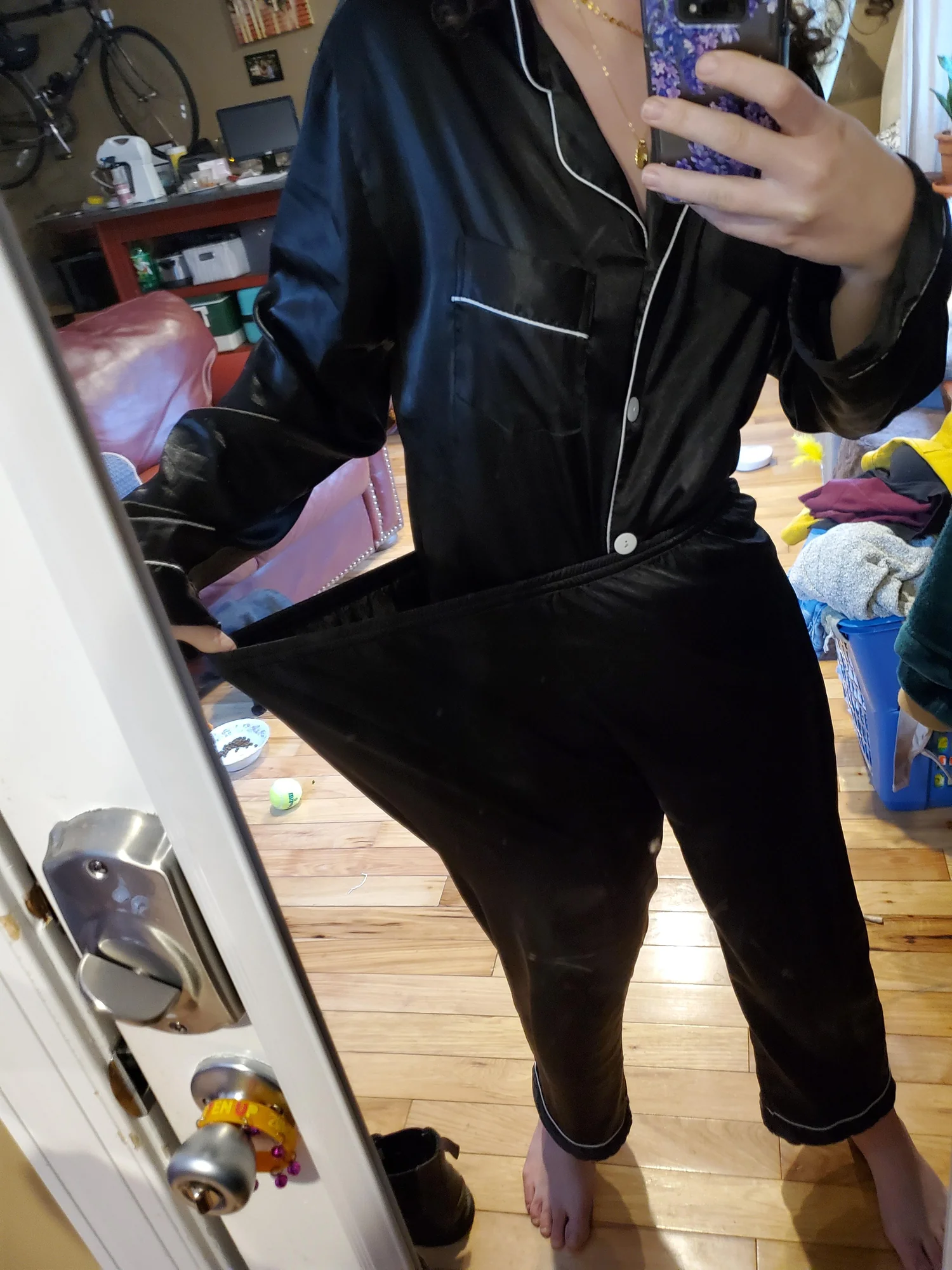
A pajama set can look polished in the product photos and still start falling apart the moment it leaves the package. Split seams, loose buttons, damaged buttonholes, and rough inner surfaces are not minor cosmetic annoyances when the garment is supposed to survive repeated movement and several hours of contact with your skin.
The reviewed evidence for OFH-AUDIT-VS6D included seams pulling apart during wear, rips already present on arrival, buttons falling off before use, and poorly stitched buttonholes that pulled threads and damaged the fabric during normal fastening.
That kind of failure changes the whole value equation. A loose button is irritating. A seam that opens during normal wear can make the garment unusable. And when buttonholes start catching threads, trying to close your pajamas should not feel like you are slowly destroying them yourself.
The problem does not always stop at the seams. OFH-AUDIT-4JD11 also drew complaints about an inner surface that felt dramatically rougher than the outside, with users describing the lining as uncomfortable enough to make the pajamas difficult to sleep in.
🖐️ Flip the Garment Before Bed
Turn the top and pants inside out before removing the tags. Run your fingers along the seams, buttonholes, and inner surface.
Look for loose threads, openings where the stitching is already separating, buttons that wobble, or areas that feel noticeably rough against your hand. Then gently fasten and unfasten the buttons once. If threads immediately pull or the buttonhole begins to fray, that is a poor start for something meant to be washed and worn repeatedly.
For comparison, the referenced quality material points to 19-momme Mulberry silk and extra-long-staple cotton fibers over 35 mm as examples of premium material specifications. But expensive materials alone do not rescue careless construction. A luxury pajama should feel smooth where it touches the body and remain intact when you use the basic parts as intended.
For the case represented by OFH-AUDIT-VS6D, the reported combination of pre-existing damage and failing closures suggests that buyers should inspect the garment closely before wearing or washing it.
Why Light-Colored Sleepwear Can Turn Out Completely See-Through
A light pajama set can look soft and polished in a product photo, then become a very different garment once you put it on. If the fabric is thin enough to reveal skin, underwear, or body outlines under normal indoor lighting, the problem is not just aesthetic—it changes where and how comfortably the sleepwear can be worn.
The reviewed evidence for OFH-AUDIT-4JD11 and OFH-AUDIT-G2QR includes repeated complaints that the black and plaid versions were "completely see through" or "extremely see through." In other words, even darker colorways did not provide the coverage buyers expected from ordinary home sleepwear.
That creates a practical problem fast. A pajama set may look perfectly acceptable under a filtered listing photo, then become unusable for answering the door, walking around family members, or simply relaxing at home without worrying about what shows through.
👀 Hold the Fabric Toward a Window
Before removing the tags, hold one layer of the garment up to normal daylight or a bright indoor lamp. Then place your hand behind it. If the outline, color, or fine details of your hand are clearly visible, expect similar transparency when the fabric stretches or lies against the body.
Pay attention to more than the product photos. The reviewed material points to fabric weight as a useful indicator when evaluating opacity, and higher-quality textile references may use measures such as momme for silk. But if a listing gives no meaningful information about the fabric itself, buyers are left judging coverage from carefully staged images—which is a poor substitute for knowing how the garment behaves in real light.
For the cases represented by OFH-AUDIT-4JD11 and OFH-AUDIT-G2QR, repeated reports of severe transparency suggest that buyers who want reliable coverage should inspect the fabric closely before treating the pajamas as suitable for shared home spaces or casual wear beyond the bedroom.
How Poor Pattern Cut and Zero Stretch Fabric Limit Arm Movement
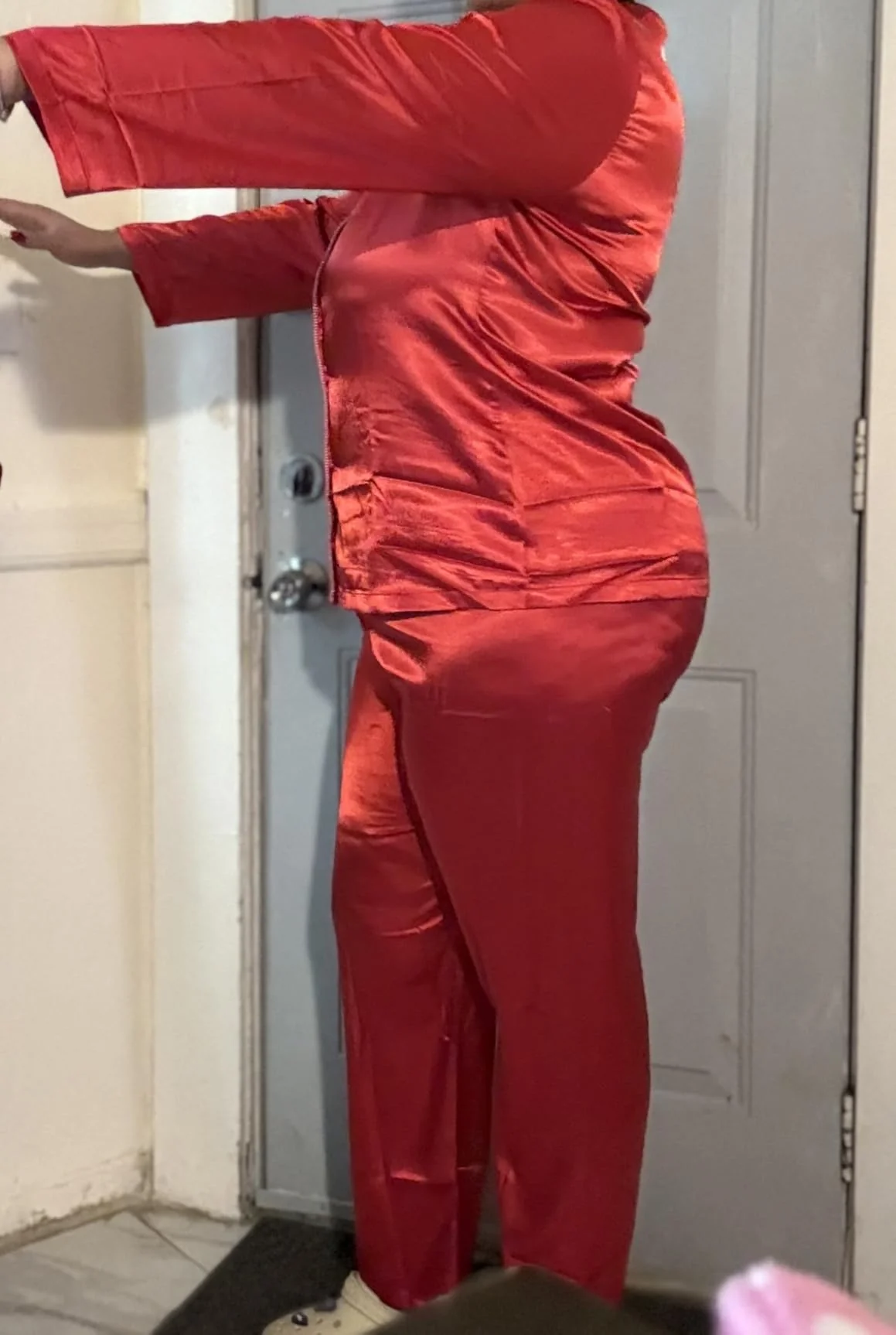
A pajama set should let you roll over, reach for a glass of water, or lift your arms without feeling like the garment is fighting back. When the fabric has zero stretch and the cut is too tight through the shoulders or underarms, even simple movement can turn into constant pulling and pinching.
That was the pattern reported for OFH-AUDIT-GXH6. Buyers described fabric with no stretch, an unusually small fit across several sizes, and arm openings tight enough to restrict normal movement. The result was a garment that could look acceptable while standing still but became uncomfortable as soon as the wearer started moving.
Poor movement is not limited to the upper body. OFH-AUDIT-VS6D also drew complaints about pants that were more than eight inches too long for the stated wearer height, causing the hem to drag on the floor. A pajama set can fail at both ends: too tight where you need room to move and too long where you need the fabric to stay clear of the ground.
↕️ Raise Both Arms Before You Keep Them
Try the top on and slowly raise both arms overhead, then reach forward and across your body. Notice whether the underarm area digs in, the sleeves pull sharply, or the whole garment rides up and feels restrictive.
Then check the pants while walking a few steps. If the cuffs drag, bunch under your feet, or make you shorten your stride, the problem is not something a softer fabric will magically fix.
The referenced quality material highlights the use of 3D design and movement simulation to check how a garment behaves as the body moves, while related source material says 3D prototyping can reduce fit errors by up to 40%. The useful takeaway for sleepwear is straightforward: comfort cannot be judged from a standing product photo alone. A good cut has to keep working when the wearer reaches, bends, turns, and sleeps.
For the cases represented by OFH-AUDIT-GXH6 and OFH-AUDIT-VS6D, the reported combination of tight arm areas, zero stretch, inconsistent sizing, and excessive pant length suggests a pattern problem rather than a minor sizing preference. Buyers looking for unrestricted sleepwear should treat real movement as part of the fit check before deciding the garment is worth keeping.
Signs You Received Used Loungewear in Damaged Packaging
A sealed package is supposed to answer one basic question: is this actually new? It becomes much harder to trust that answer when the garment arrives with visible stains, an odd smell, open buttons, or the appearance of having been crumpled into a ball before being stuffed into the bag.
That was the kind of arrival reported for OFH-AUDIT-5QY7. The reviewed evidence includes blood or grease stains inside sealed packaging, an unusual odor, and an unbuttoned garment that led buyers to question whether it had been previously handled or worn.
OFH-AUDIT-GXH6 raised a different version of the same quality problem. Buyers reported receiving the pajamas heavily wrinkled despite sealed packaging, with pieces balled up and turned inside out rather than folded in a condition that felt ready for a new purchase.
That does not prove that every badly packed garment was previously worn. Shipping and warehouse handling can leave clothing wrinkled or displaced. Visible stains, strange odors, and signs of prior handling are the details that make the situation harder to dismiss as ordinary packaging damage.
🔎 Open the Package Before Removing the Tags
Lay every piece flat as soon as you open the package. Check both sides for stains, especially around the collar, underarm, waistband, and other areas that would normally contact the body.
Look at the buttons and closures too. An already unbuttoned garment is not automatically used, but paired with stains or an unusual smell, it deserves a closer look. Take clear photos before washing or wearing anything that appears damaged or previously handled.
A reliable quality-control process should catch obvious stains, damage, and careless packing before the garment reaches the buyer. When a supposedly new pajama set arrives with those problems, the concern is not just presentation—it is whether the product was properly checked before being sealed and shipped.
For OFH-AUDIT-5QY7 and OFH-AUDIT-GXH6, the reported condition of the garments is enough to justify documenting the package immediately and reconsidering whether the items meet the expected standard for a new purchase.
How to Wash Silk and Cashmere Pajamas Without Shrinking Them in the Dryer
Luxury silk and cashmere pajamas can be expensive to replace, but the biggest damage often happens in the laundry room. Heat is the setting most likely to turn a soft, well-fitting pajama into something smaller, rougher, or misshapen.
For silk, cold-water washing and air drying are the safer routine. The referenced care guidance specifically recommends hand washing or dry cleaning, avoiding machine drying, and drying flat or by line to help preserve the garment's shape and feel.
The same basic rule matters for luxury cashmere pajamas. Avoid treating premium fibers like ordinary T-shirts that can be tossed into a hot dryer without consequences. Once excessive heat changes the fit or feel, the damage can be difficult to reverse.
A Simple Care Routine for Silk and Cashmere Pajamas
Wash silk and cashmere separately from rougher fabrics.
Use cold water and a gentle detergent suitable for delicate garments.
Avoid twisting or aggressively wringing the fabric.
Press out excess water carefully, reshape the garment, and let it air dry away from direct heat.
Skip the dryer. The referenced care sources warn that heat can cause delicate garments to shrink or lose their original shape, with related material citing shrinkage in the 5–10% range when certain fabrics are machine-dried.
Care also matters because comfort depends on the material continuing to behave as expected. In the reviewed evidence, OFH-AUDIT-4JD11 received complaints that its polyester content felt hot and poorly suited to comfortable sleep in warmer conditions. That is a useful reminder to check the actual fiber label before following a care routine designed for silk or cashmere.
The safest approach is straightforward: read the sewn-in care label, wash delicately, and keep expensive pajamas away from high dryer heat. A few extra minutes of careful washing are cheaper than replacing a luxury sleepwear set that no longer fits.
CONCLUSION
A careful pajama purchase starts with what you can check yourself, not just what the product listing promises. Read the sewn-in fiber label and compare it with the description. Feel the inside of the garment, because the surface against your skin matters more than a polished outer finish. For dark colors, test for dye transfer before putting the set near white sheets or light furniture. For light fabrics, check transparency in normal daylight.
Construction deserves the same attention. Inspect seams, buttons, and buttonholes, then move your arms and walk in the pants before removing the tags. When a package arrives, check for stains, unusual smells, or signs of careless handling and take photos before washing anything questionable.
For silk and cashmere, follow the care label and keep delicate garments away from high dryer heat. A few simple checks can prevent an attractive pajama set from becoming an expensive source of discomfort or damage.
THE ULTIMATE BUYING VERDICT
| Verdict | Key Consideration | Recommendation |
|---|---|---|
| 🔴 Significant concerns | Mismatched fiber claims, repeated skin irritation reports, strong chemical odors, persistent dye transfer, damaged construction, severe transparency, or major fit problems | Pause before wearing or washing the garment. Check the fiber label, inspect the inside, document visible problems, and avoid keeping a set that fails basic comfort, condition, or fit checks |
| 🟡 Acceptable with limitations | A garment may have minor packaging wrinkles or other issues that do not necessarily prove prior use, while delicate fabrics require careful washing and drying | Judge the problem in context, document questionable condition when it arrives, and follow the care label closely rather than treating premium sleepwear like ordinary clothing |
| 🟢 Meets long-term expectations | Accurate material labeling, a comfortable inner surface, secure seams and closures, practical fit, adequate coverage, clean arrival condition, and gentle care requirements | Look for clear fiber information, inspect the garment before use, test movement and opacity, and use cold-water washing and air drying for delicate silk or cashmere |