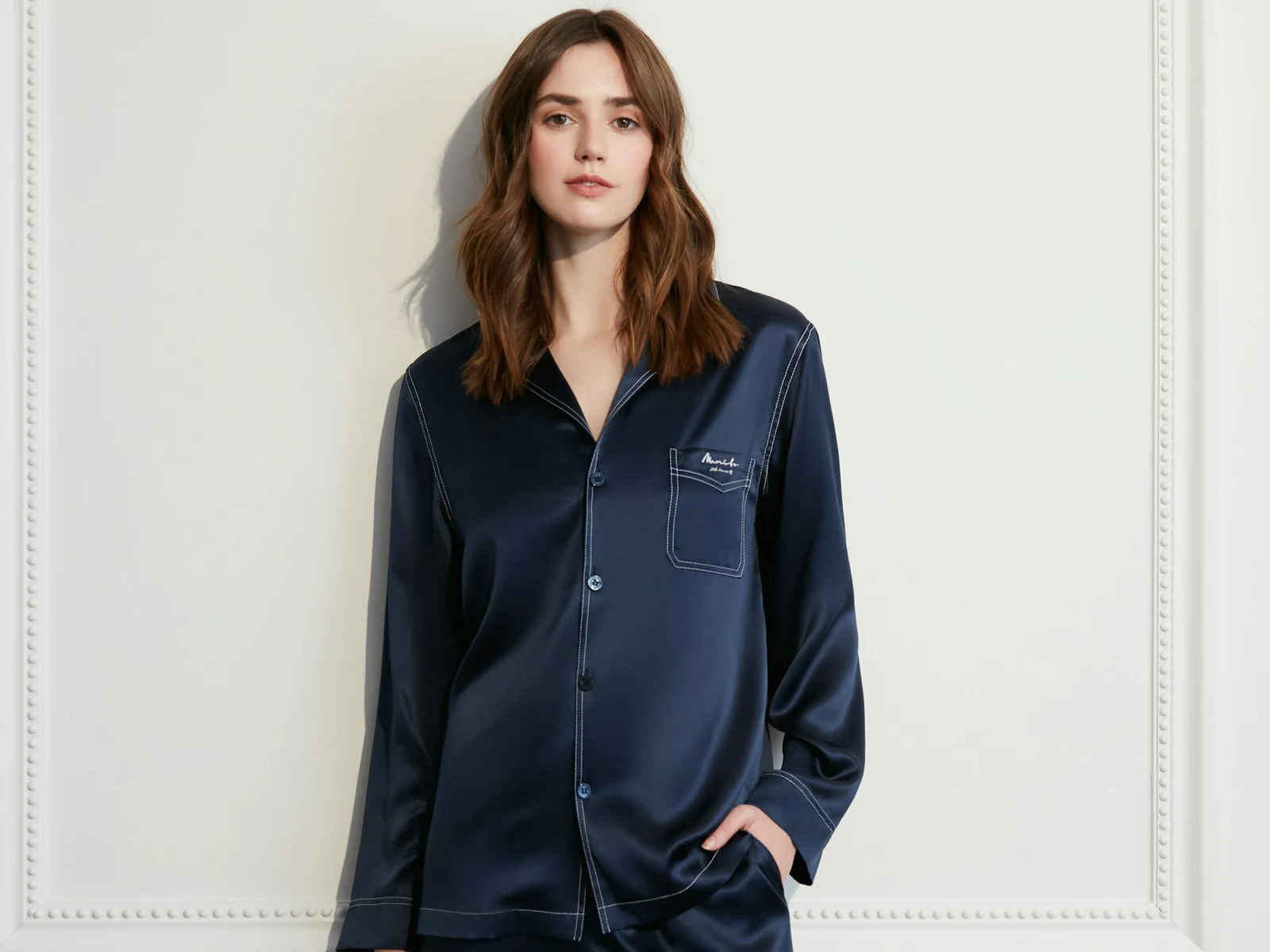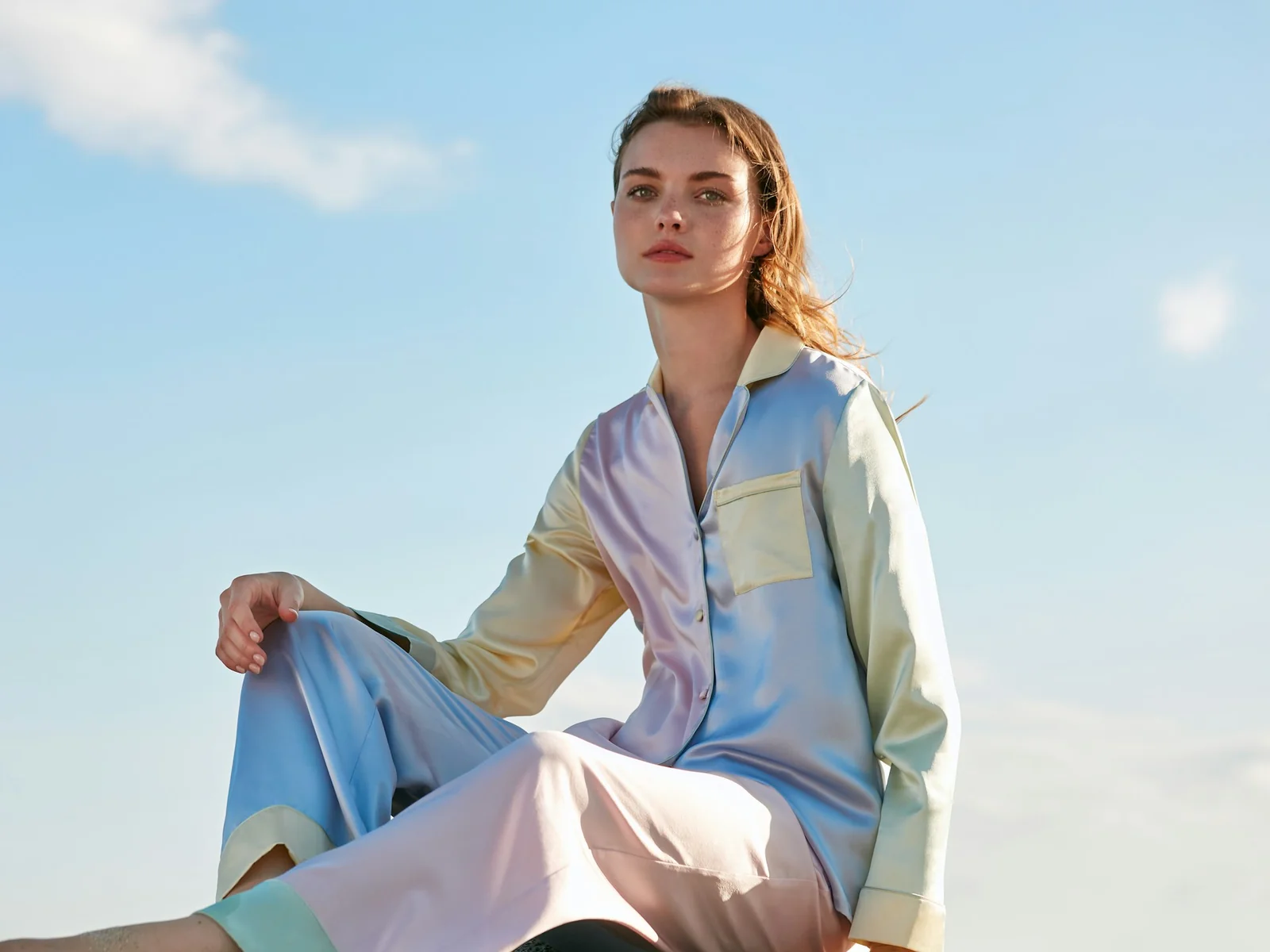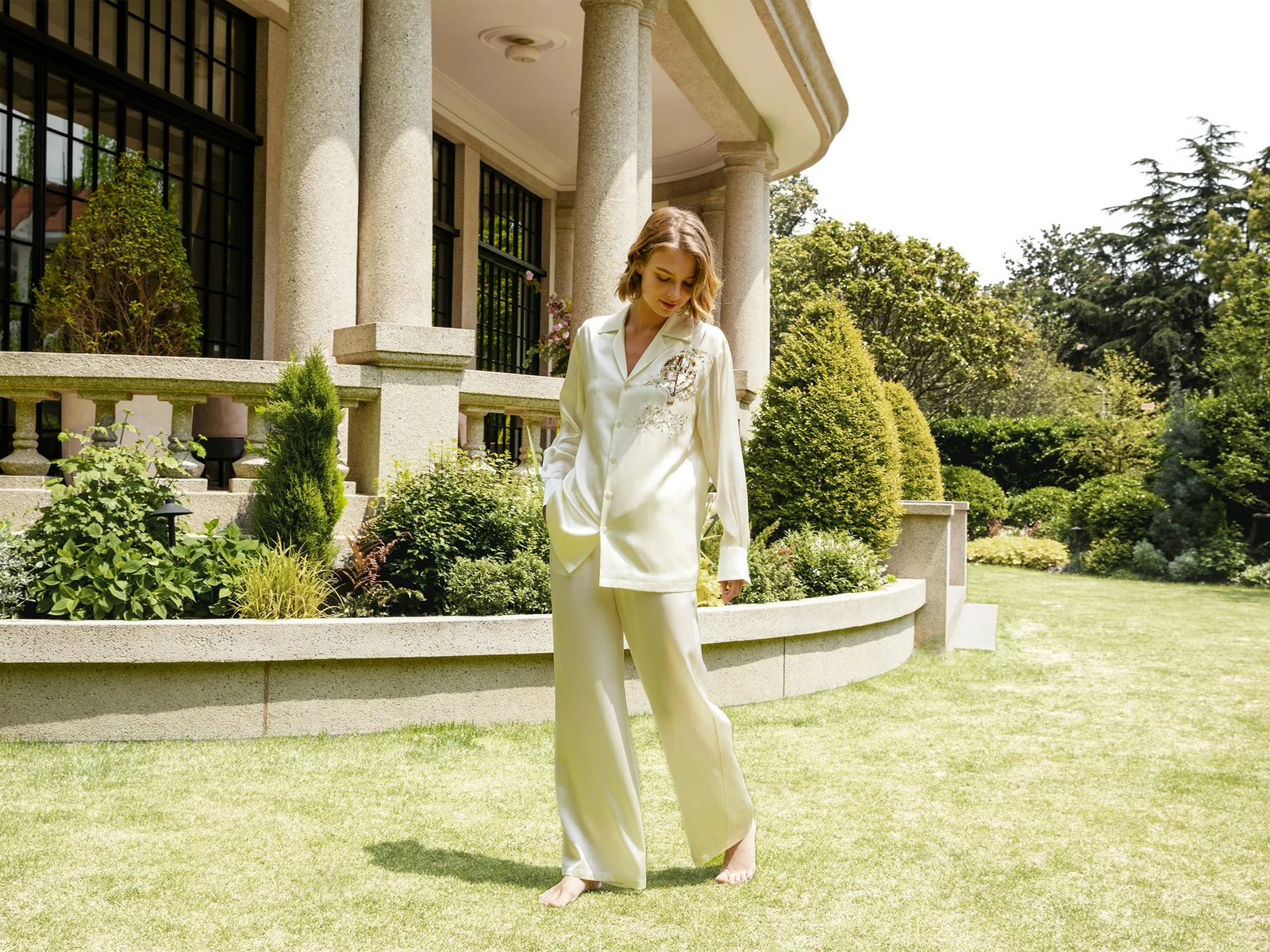
A pajama set can feel soft and look polished when you first try it on, yet become frustrating once you start moving around at night. Tight armholes may pull when you raise an arm. A stiff fabric may resist when you turn in bed. Pants that look fine while standing can drag under your heels when you walk.
These problems are not always solved by choosing a different size. The reported examples show several different fit failures: zero-stretch fabric with tight arms, multiple sizes running severely small, pant legs more than eight inches too long, and plus-size patterns that may not provide enough room in the places that need it most.
For luxury pajamas, comfort should mean more than softness or appearance. The fabric needs to allow movement, the measurements should match the size chart, and the pattern should make sense for the body wearing it.
Why Zero-Stretch Pajamas Can Make Every Turn in Bed Feel Restrictive
A pajama set can look polished, feel smooth in the store, and still become surprisingly annoying once you actually try to sleep in it. The problem starts when the fabric has no give at all. Every time you bend an arm, pull up a knee, or turn from one side to the other, the garment moves only as far as its original cut allows.
One reported case, recorded as OFH-AUDIT-GXH6, described the fabric as having zero stretch, with especially tight arms and armholes. The result was not simply a close fit: normal movement could turn into a series of small pulls against the skin as the fabric resisted the body's position changes. luxury pajamas
That matters at night because sleepwear is not worn in a static pose. A set that feels acceptable while standing can become restrictive once the body starts changing position repeatedly. If the fabric cannot give, the wearer ends up fighting the cut of the garment instead of moving naturally inside it.
The more expensive the pajamas, the less excuse there is for this kind of mismatch. "Luxury" should not mean a beautiful fabric that behaves like a fixed shell the moment you lie down.
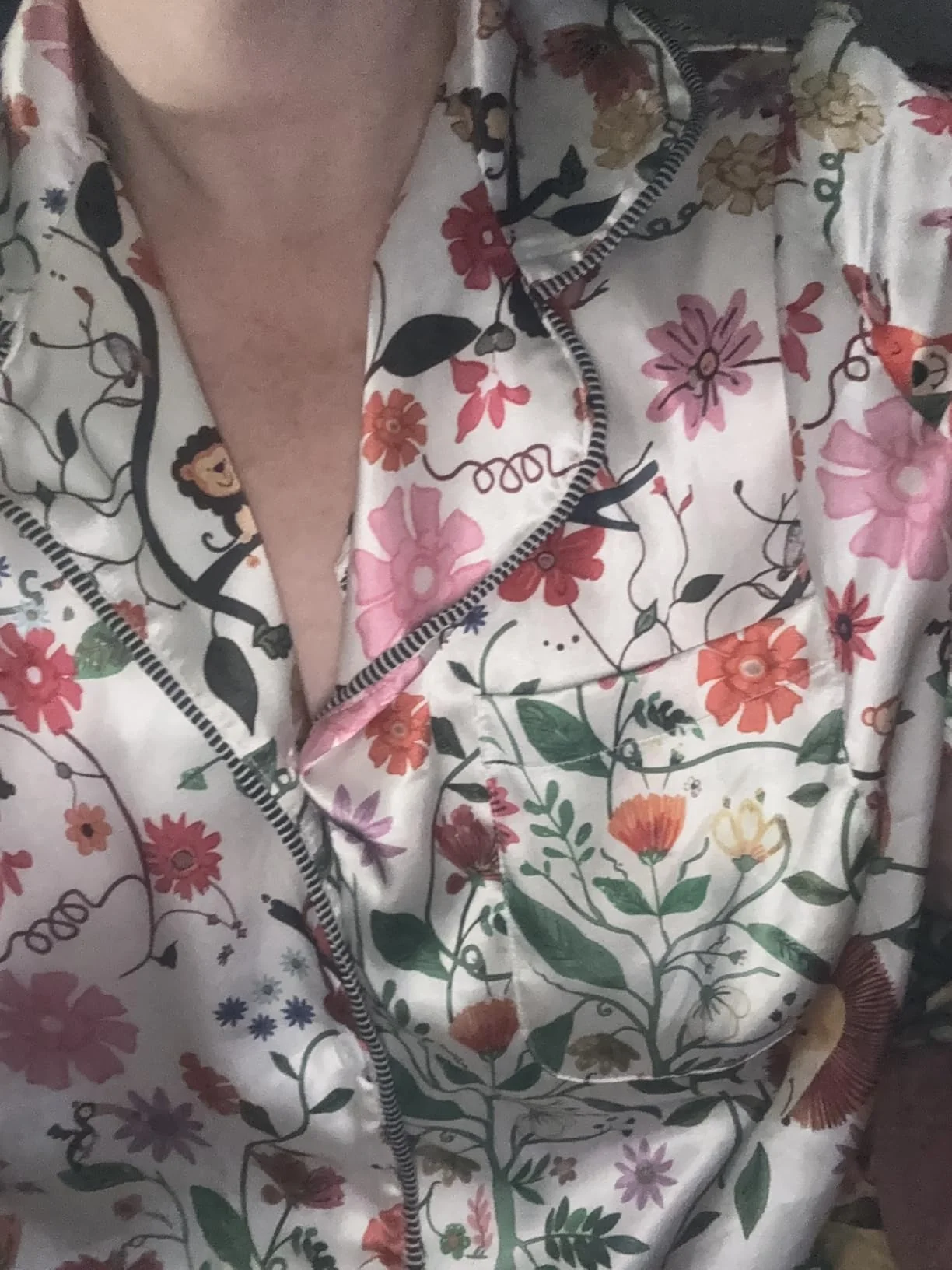
↔️ Gently Pull the Sleeve and Side Seam
Hold a section of the pajama fabric between both hands and give it a light pull. Then let go. If it barely moves—or stretches but stays distorted afterward—expect the garment to rely heavily on loose sizing and pattern shape to provide movement.
For sleepwear designed around active body movement, the supplied performance guidance points to roughly 20% to 30% stretch recovery as a useful benchmark for freedom of movement while helping the fabric return toward its original shape. In plain terms, the material should give when your body moves and recover after the movement instead of staying pulled out or resisting every change of position.
That does not mean every luxury pajama needs a visibly stretchy, athletic feel. Silk-like and satin styles can still look refined while incorporating enough give to prevent the sleeves, shoulders, waist, or seat from becoming the limiting factor.
The practical takeaway is simple: softness is not the same as mobility. A fabric can feel pleasant to touch yet still become uncomfortable after several hours if it has no room to respond when the body turns.
For the reported product run associated with OFH-AUDIT-GXH6, the combination of zero stretch and tight-fitting areas made the comfort claim difficult to reconcile with real nighttime movement. Users who change position frequently or dislike clothing pulling against the skin may want to check for actual fabric give before treating a smooth surface or luxury label as proof of comfort.
Inconsistent Sizing and Dragging Hems: Common Sizing Issues Across All Sizes
Sizing problems become much harder to excuse when they are not limited to one body type or one bad size. If Small, Medium, Large, and XL all run noticeably small, the issue is no longer just a shopper choosing the wrong number on a size chart.
In the product run documented as OFH-AUDIT-GXH6, users reported that the pajamas ran severely small across multiple labeled sizes, while the size recommendation system also failed to steer shoppers toward a workable fit. luxury pajamas
That creates a particularly frustrating buying experience. The shopper follows the recommendation, receives the suggested size, and then discovers that the garment is still too tight through key areas such as the arms and body. At that point, an automated size tool is not solving uncertainty—it is simply giving the uncertainty a more polished interface.
The opposite problem can be just as disruptive. Another reported case, OFH-AUDIT-VS6DN, described pajama pants with legs more than eight inches too long, enough for the hem to drag rather than sit near the intended ankle position. luxury pajamas
So the same broader quality problem can show up in two completely different ways: one shopper cannot move comfortably because the garment is cut too small, while another is left managing excessive fabric around the feet. Neither outcome feels like a finished product designed around a predictable fit.
📏 Compare the Garment to the Chart Before Wearing
Lay the top or pants flat and compare the actual chest, waist, inseam, and sleeve measurements with the brand's own size chart. A quick tape-measure check can reveal whether the garment is merely a little different from expectation or dramatically outside the listed range.
Better fit begins before the pajamas reach the shopper. The supplied fit guidance points to 3D prototyping and CAD-based fit modeling as tools that can reduce fit errors by up to 40%. In practical terms, the goal is simple: test the pattern across more realistic body shapes and movements before the same flawed proportions are repeated across an entire size range.
That kind of process cannot guarantee that every body will fit identically, but it should make the size labels more useful and reduce the gap between what a chart promises and what arrives at the door.
For the reported runs associated with OFH-AUDIT-GXH6 and OFH-AUDIT-VS6DN, the problems went beyond an ordinary "runs small" or "runs long" warning. The pattern suggests that shoppers should treat size recommendations and labels as starting points, not final proof of fit, especially when the consequences range from restrictive movement to hems dragging around the floor.
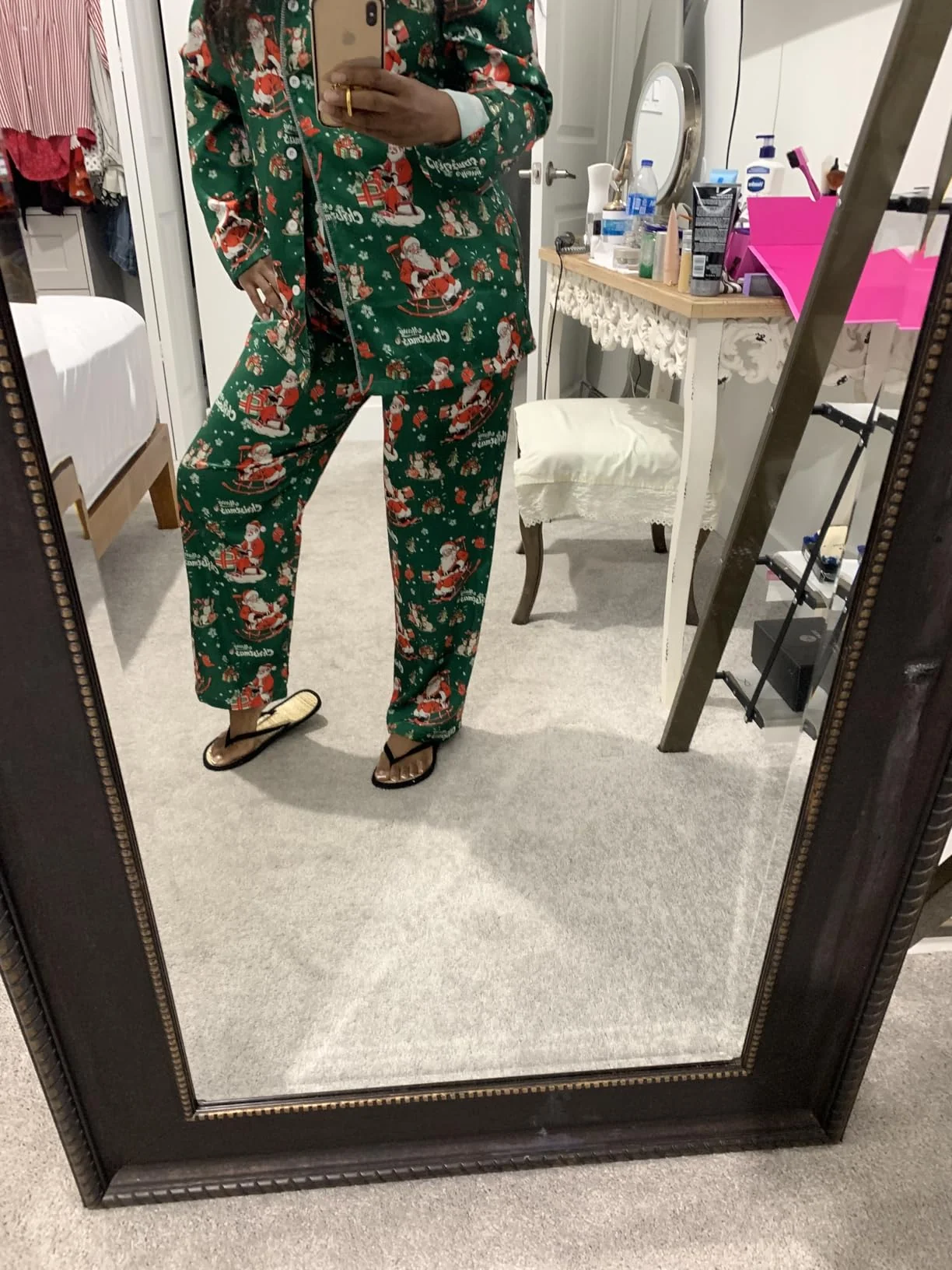
Tight Armholes and Long Pants Legs: How Poor Fit Affects Daily Comfort
Poor fit is not always about whether the pajamas technically "fit." Sometimes the garment goes on, buttons up, and looks fine in the mirror—then the problems start as soon as you move.
One reported product run, OFH-AUDIT-GXH6, was repeatedly described as having extremely tight armholes and arms. Raising an arm could make the fabric pull sharply around the underarm area, turning an ordinary movement into something the wearer had to think about. luxury pajamas
That kind of restriction can be especially noticeable in sleepwear. Reaching for a phone, lifting an arm to adjust a pillow, stretching after waking up, or simply changing position should not require the garment to pull back like it has reached its limit.
At the other end of the outfit, OFH-AUDIT-VS6DN presented the opposite kind of fit failure: pant legs reported as more than eight inches too long, with the hem dragging on the floor. luxury pajamas
That is not just an awkward silhouette. Extra fabric around the feet can be stepped on, dragged across the floor, or gradually worn down at the hem. A pajama leg that is too long can turn a relaxed walk around the house into an annoying little obstacle course.
👕 Lift Both Arms Before Removing the Tags
Raise your arms overhead, then reach forward and across your body. If the armholes bite, the sleeves pull the whole top upward, or you feel the fabric cutting into the underarm area, the problem is likely to become more obvious during longer wear.
Then walk a few steps in the pants without shoes. If the hems slide under your heels or sweep the floor, do not assume they will somehow "settle" after a night of wear. The extra length may keep getting stepped on and can wear down faster at the bottom.
This is why a usable size range needs more than larger or smaller measurements on the same basic pattern. Different sizes also need proportions that make sense when the wearer moves.
For the reported runs linked to OFH-AUDIT-GXH6 and OFH-AUDIT-VS6DN, the complaints show two ends of the same comfort problem: too little room where the body needs to move, and too much fabric where the body needs to walk. Tall shoppers and those who need more room through the upper body may want to look beyond the label and check actual garment measurements before assuming the listed size will provide everyday comfort.
What to Look for in Plus-Size Sleepwear Patterns to Ensure Proper Fit
The best plus size luxury pajamas are not simply made by taking a smaller pattern and enlarging every measurement. That shortcut can create awkward proportions: shoulders that sit wrong, sleeves that become too long, armholes that feel too tight, or pants that add extra length without giving enough room where the body actually needs it.
A well-designed plus-size pattern should be built around how proportions change across the size range, rather than assuming that every part of the garment grows at exactly the same rate.
Look first at the available size range. A broader offering, such as 0–30 or XS–5X, can indicate that a brand has considered more than a narrow set of standard measurements. But range alone is not enough. The useful question is whether the larger sizes have been shaped and graded to fit different bodies rather than simply scaled up from the smallest sample.
The pattern should also provide enough room in areas that tend to affect everyday comfort, including the bust, waist, hips, upper arms, and seat. A garment can have a larger overall size and still fit badly if those areas were not adjusted thoughtfully.
For plus-size sleepwear, this matters even more because pajamas are worn while sitting, lying down, stretching, and changing positions—not just standing in front of a mirror. A set that looks balanced on a hanger can still feel awkward if the proportions do not work once the body moves.
Research supplied for this section also links more accurate plus-size fit with improved wearer confidence, with one cited finding reporting a 30% increase in well-being when brands offer genuinely inclusive sizing. The broader point is straightforward: better fit is not only about adding more fabric. It is about making the finished garment feel as though it was designed for the wearer rather than enlarged from someone else's pattern.
When comparing plus size luxury pajamas, check the size chart for detailed body and garment measurements instead of relying only on labels such as 1X, 2X, or 3X. Look for consistent proportions across the range and pay attention to reviews from shoppers with similar height and body shape.
A larger number on the tag does not automatically mean a better fit. The difference is in the pattern: a thoughtful design changes where the room goes, while a simple enlargement only makes everything bigger.
CONCLUSION
A careful pajama purchase starts with movement, not just appearance. Before keeping a set, raise both arms, reach forward and across your body, and walk several steps in the pants. These simple checks can reveal tight armholes, restrictive sleeves, and hems that are too long.
It is also worth comparing the actual garment measurements with the brand's size chart. Do not assume that a recommended size will fit simply because an automated sizing tool suggests it. Reported cases show that several labeled sizes can still run small, while another product had pant legs more than eight inches too long.
For plus-size sleepwear, look beyond the size label. Check whether the pattern provides enough room through the bust, waist, hips, upper arms, and seat. A wider size range is useful, but thoughtful proportions matter more than a larger number on the tag.
THE ULTIMATE BUYING VERDICT
| Verdict | Key Consideration | Recommendation |
|---|---|---|
| 🔴 Significant concerns | Zero-stretch fabric, tight armholes, severely small sizing, or pant legs that drag can interfere with normal movement. | Check fabric give, actual measurements, armhole comfort, and pant length before treating the pajamas as a good fit. |
| 🟡 Acceptable with limitations | Smooth fabrics can still feel comfortable when standing but become restrictive during sleep or movement, while size labels may not reflect actual proportions. | Test the garment through normal movements and compare measurements with the brand's chart rather than relying only on the labeled size. |
| 🟢 Meets long-term expectations | Pajamas that allow natural movement, use consistent measurements, and provide thoughtful proportions across the size range are better suited to everyday wear. | Look for enough room in key movement areas, useful garment measurements, and patterns designed around different body proportions. |